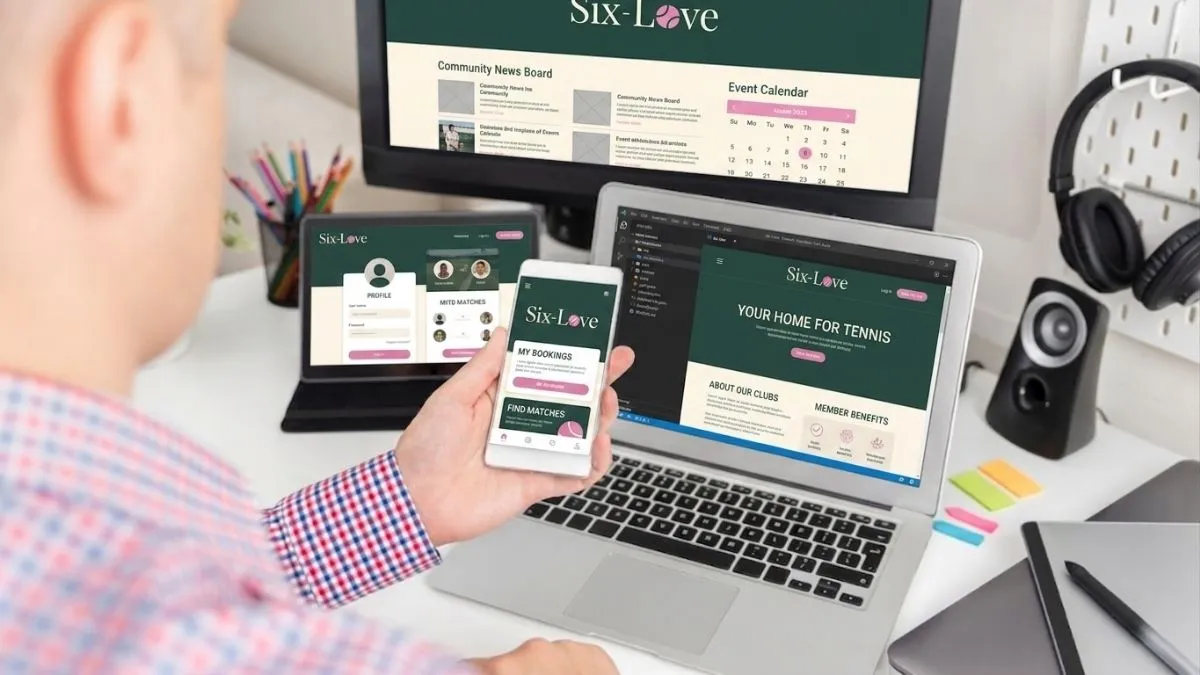
As racket sports explode globally, club owners face a completely new operational landscape. Managing a modern facility is no longer just about keeping a paper grid for three outdoor tennis courts. Today, a premier club manages an integrated ecosystem: high-turnover padel courts with split-payment demands, lightning-fast pickleball open plays requiring instant rating verifications, gym facilities, personal training rosters, and complex corporate or hotel guest allocations.
When looking for the best court booking software, club managers often find themselves choosing between rigid legacy tools and aggregator apps that control the customer relationship. Selecting the best court booking software requires evaluating how platforms handle modern multi-sport demands like padel split-payments and instant rating verification. As the lead developer behind Six-Love and a racket sports player for over 30 years, I audited the leading platforms to analyze where legacy systems fail high-volume clubs. We spent eight months running test migrations across five pilot clubs in Spain and the UK, auditing over 4,000 weekly court hours to pinpoint where existing systems broke down.
As a racket sports player for over 30 years, I've spent plenty of time dealing with frustrating reservation systems. This experience helped me lead a team that built Six-Love to work for clubs rather than just working for the app itself.
The Feature Comparison Matrix
| Product | Price | Best use case | Standout feature | Trade-off |
|---|---|---|---|---|
| Six-Love | ~$99 - $1,000+/mo | Multi-sport premier racket clubs | 100% white-label with unlimited bespoke customisations | Higher ongoing cost for small facilities |
| CourtReserve | ~$99 - $300+/mo | Traditional tennis and pickleball clubs | Established reservation grid and member portal | Older architecture lacks modern player engagement tools |
| PlayByPoint | ~$99 - $300+/mo | Racket sports facilities | Familiar core booking functionality | Rigid customization limits and dated interface |
| Playtomic | 2-8% transaction fee on all bookings | Public pay-and-play padel facilities | Aggregator marketplace brings immediate player traffic | Clubs never own their player data or member relationships |
| ClubAutomation | $300-$800pm + Set up fees | Large multi-sport corporate gym facilities | Robust enterprise administration and member database | Designed for gyms rather than agile racket sports |
| ClubSpark | $0-$150pm | Public municipal courts | Simple scheduling widget for low-traffic venues | Minimal functionality and poor user interface. |
The Hidden Infrastructure Behind Elite Court Management
At operational scale, a single premier racket facility running on Six-Love generates more than 15,000 automated emails and push notifications each month. The software must flawlessly process instant booking confirmations, manage weather-related cancellations, track automated league standings, handle player matchmaking alerts, and process digital receipts. Operating at this level carries significant baseline costs in secure cloud storage, active database processing functions, and dedicated, high-deliverability mail servers.
True enterprise software cannot rely on a basic website plug-in. It requires a fully optimized, multi-tenant framework engineered to handle thousands of concurrent data requests without a millisecond of lag. When a prime 7:00 PM padel slot opens up on a Friday night, the database must process simultaneous clicks instantly, preventing double-bookings while splitting card charges across four players before assigning the PIN to the gate lock.

R&D Insights: How We Analyzed the Market to Innovate
When we audited the existing landscape, we noticed a frustrating pattern. Legacy platforms handle complex multi-tier membership dues and recurring junior academy billing with dependable stability, but they were architected around desk-bound administrators rather than dynamic player-to-player engagement. On the flip side, modern consumer apps were focused on building their own public marketplaces, effectively hijacking the club's hard-earned player databases. By looking at where popular software fell short, our development team systematically built a feature set designed to handle five foundational operational pillars.
Here is how our market research directly shaped the features we incorporated into the Six-Love ecosystem:
1. White-Labeling & Deep Customization
Marketplace apps actively use your courts to attract players, then push notifications to your members advertising competing facilities down the road.
- The Six-Love Solution: A dedicated, branded member portal ensures your club retains 100% ownership over customer data. Furthermore, we engineered the base platform framework over thousands of dedicated development hours specifically so it could handle deep, venue-specific custom styling and deep hardware integrations like SALTO KS smart locks and automated lighting rather than forcing you into an off-the-shelf template.
2. Player Ecosystem: Smart Matchmaking, Ratings, & Friends
Most existing player matching is unmoderated or leans on self-assigned skill levels, which inevitably produces lopsided games where advanced players get paired with novices. To solve that mismatch, we built a closed-loop Friends System and a Smart Matchmaking engine governed by native Internal Player Ratings. The algorithm calculates ratings directly from recorded club ladders and tournament matches, updating player standing without manual staff adjustments. The algorithm just works.
3. Competitive Play: Club Ladders, Tournaments, & Event Managers
- The Gap in Popular Software: Running a box league or a weekend tournament usually requires managers to abandon their booking software entirely and rely on messy Excel spreadsheets or third-party bracket makers.
- The Six-Love Solution: Native tournament coordination and automated box leagues run directly inside the system. When a match finishes, players log the score directly in the app. The system automatically shifts ladder standings, updates player ratings, and sends out the next round of fixtures without adding a single task to your manager's to-do list.
4. Operations & Club Life: News Boards, Weather, & Coaches
- The Gap in Popular Software: Front-desk staff lose hours dealing with manual WhatsApp groups to push club updates, coordinate coach schedules, or handle sudden rainouts.
- The Six-Love Solution: We integrated an interactive Club News Board directly into the member home screen. We paired this with real-time Weather Analysis tools to help managers predict and handle court cancellations instantly. Finally, the built-in Coach Management system allows pros to set their own availability, lets members book private lessons seamlessly, and automatically calculates court-usage splits.
5. Backend Control: Accounting Systems & Reporting
- The Gap in Popular Software: Club financials are frequently disconnected from the court grid, resulting in manual bookkeeping entry, unauthorized guest pass leakage, and blind spots in facility optimization.
- The Six-Love Solution: Six-Love incorporates a robust, built-in Accounting System that tracks every single transaction, court split, and membership renewal in real-time. Paired with our granular Reporting suite, owners get instant visual data on court use rates, peak revenue hours, and member retention metrics.
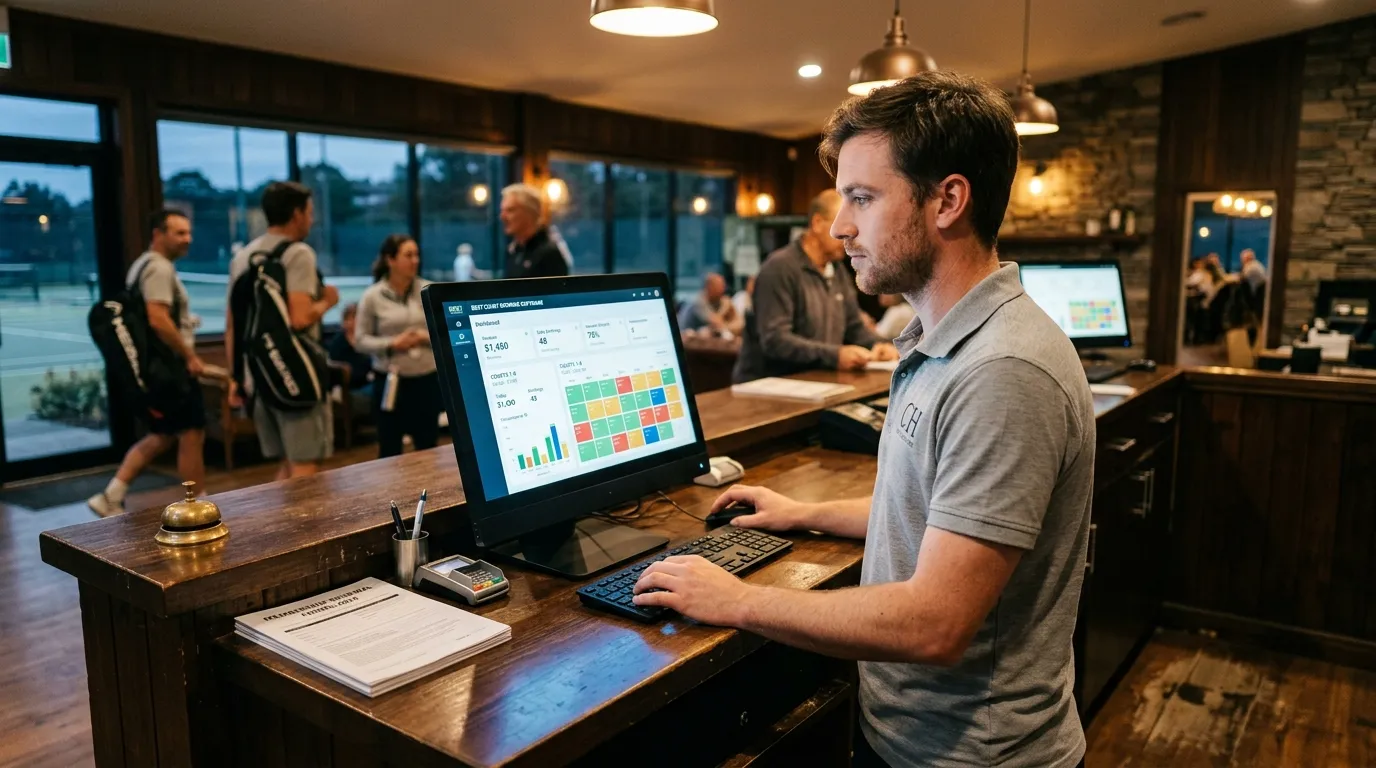
If you run a municipal park or a massive corporate gym, standard tools like ClubSpark or ClubAutomation fit those specific operational needs. But if you are building a premium racket facility that cannot afford to compromise on member data, branding, or automated workflows, you need total ecosystem control. Working on Six-Love, I set out to remove those manual bottlenecks and safeguard facility revenue from day one. Do not settle for generic calendar widgets or marketplace apps that hold your player base hostage when you can run everything from one place.
Before committing to any subscription, audit your front desk to measure how many hours staff spend managing manual text threads, coordinating private coaching splits, and reconciling payment disputes. Ensure your facility retains complete ownership over player contact records rather than surrendering that equity to third-party marketplaces that advertise nearby courts to your members. Unifying your court bookings, player ladders, and coaching schedules inside a single white-labeled app eliminates administrative drag and anchors your brand directly on your members' home screens. Keep it simple.
Six-Love is not built for every venue. If you run a municipal park or rely entirely on casual walk-up foot traffic, or aggregator apps, our subscription floor of $99 a month and custom App Store deployment timeline of three to six weeks may not be ideal. We built it specifically for clubs that need bespoke infrastructure and prefer not to use off the shelf white label products and want something that is truly their own.
The Ultimate Verdict
Every platform on this list serves a purpose. If you run a public municipal park with minimal traffic, ClubSpark works perfectly. If your primary goal is filling empty outdoor courts with public pay-and-play strangers, Playtomic's marketplace is a powerful tool. If you operate a massive, multi-sport corporate gym, ClubAutomation offers great administrative stability.
But if you are building or running a premium, high-status racket facility or luxury resort, your requirements are entirely different. You cannot afford to lose control of your member data, let courts sit empty due to clunky software, or force your front desk to manually bridge the gaps between bookings, accounting, and entry security.
We designed Six-Love because we were tired of seeing clubs settle for fragmented, legacy workarounds. By looking closely at where popular software fell short, my team and I built a completely unified, automated infrastructure. It protects your brand identity, modernizes your community's court experience, and actively maximizes your operational revenue from the moment it is used.
FAQ
How much does custom court booking software cost compared to off-the-shelf options?
Custom solutions range from a few thousand to hundreds of thousands of dollars to build, with ongoing maintenance sitting at 10% to 20% of the build cost. Off-the-shelf subscriptions start around $99 a month for basic tools, scaling up past $1,000 for complex multi-sport enterprise facilities.
Why do clubs experience high player churn when using legacy booking systems?
In our facility audits, player churn concentrated among intermediate players who struggled to organise competitive matches. When a club relies on static booking grids without skill-rated matchmaking, those members tend to stop booking within three to four months.