Group clinic scheduling: the system that stops double-bookings
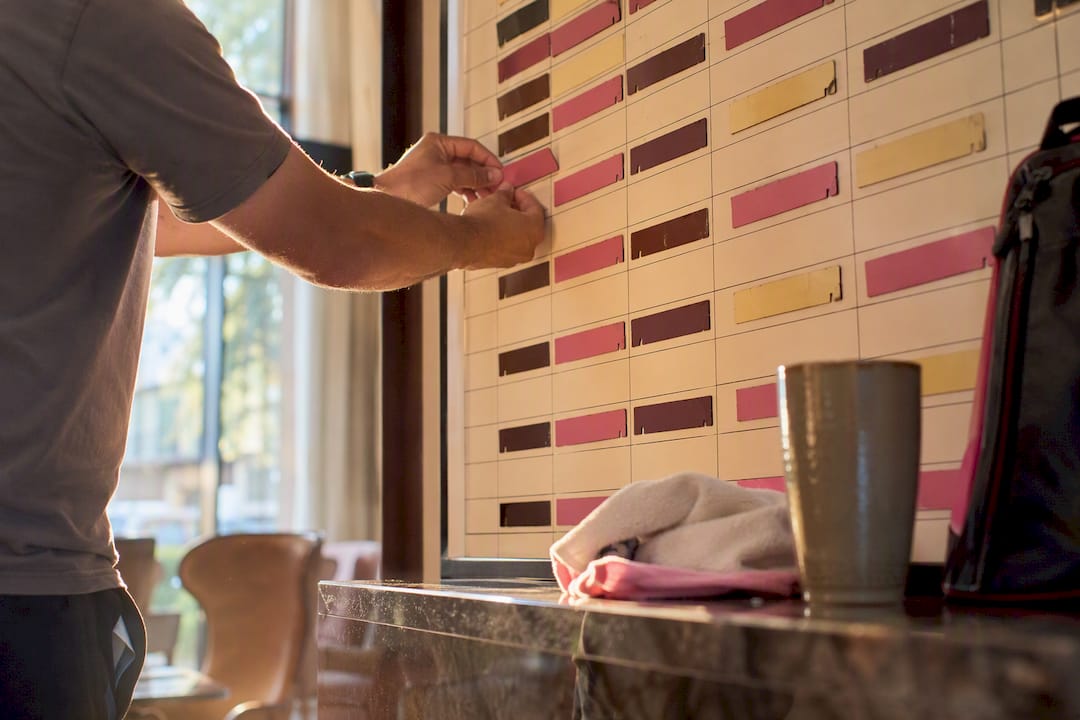
The fastest way to cut double-bookings and raise clinic revenue is a centralised, real-time booking system that ties coach, court and clinic together, then packaging those clinics as outcome-focused series rather than loose hours. Clubs that switch to this model report material gains: Six-Love clients have seen a 22% revenue increase within two months of implementation. Fix the booking system first. Everything else in this guide builds on it.
TL;DR:
- Centralized, real-time booking systems linking coach, court, and clinic maximize capacity and reduce double-bookings, leading to significant revenue gains for clubs.
- Packaging multi-week series around outcomes rather than hours improves conversion rates and enhances member engagement.
- Booking policies such as short advance windows, deposits, and automated reminders effectively minimize no-shows and cancellations.
- Treating courts and resources as bookable assets prevents scheduling conflicts, especially with shared equipment and staff.
- KPIs like fill rate, no-show rate, revenue per court hour, and attendance conversion are critical to tracking scheduling effectiveness after implementation.
Table of Contents
- What good group clinic scheduling looks like
- How do you set capacity and pricing for clinics?
- What booking rules cut no-shows and gaming?
- Coordinating coach availability and court allocation
- Essential scheduling software features for clinics
- Which KPIs actually tell you the schedule is working
- An implementation checklist for launching group clinics
- A head pro’s note on rolling this out
- Get the booking system built around your clinics, not the other way round
- Sources
- FAQ
What good group clinic scheduling looks like
Most clubs run five clinic formats: drop-in single sessions, themed skill clinics, multi-week series, junior blocks, and social mixers. Each does a different job, and mixing them up on the same calendar without clear labels is where scheduling chaos begins.
Session length matters more than most managers assume. Sessions lasting about an hour to an hour and a half suit nearly every format, from a padel beginner drop-in to a junior tennis block. Series length is where the real decision sits.
Clinic series commonly run four to eight weeks, and packaging them around a result rather than a duration changes how they sell.
- Drop-in sessions: 60 minutes, no commitment, good for filling off-peak courts
- Themed clinics: 75–90 minutes, focused on one skill (third-shot drop, doubles positioning, serve mechanics)
- Multi-week series: four to eight weeks, sold as “ready for league play” rather than “eight hours of coaching”
- Junior blocks: 60 minutes, term-length series aligned with school calendars
- Mixers: 90 minutes, social format that doubles as a soft sell for series enrolment
“Six-week beginner series, ready for league play” converts better than “six lessons” because the member is buying an outcome, not a slot. That framing alone tends to lift sign-up rates without changing a single price.
How do you set capacity and pricing for clinics?
Capacity depends on the sport and the court split, not a single house rule. For example, padel courts hold moderate-sized groups for drills-based clinics; tennis courts support larger groups for rotation drills but smaller groups for live-ball feeding. Pickleball, played on smaller courts, works best with moderate-sized groups to ensure active participation.
Pricing works best on two axes: per-player for open clinics, and per-court (or per-series-block) for private group bookings. A four-week beginner series might run as a flat package price with a small discount against paying for four single sessions, which rewards commitment without discounting the coach’s time too heavily.
- Per-player drop-in: priced individually, no package discount
- Per-series package: four to eight sessions, bundled at a modest discount to single-session rates
- Peak vs off-peak: weekday mornings priced lower to fill quiet courts, evenings and weekends at full rate
Pro Tip: Price your intro clinic slightly below your standard drop-in rate. The margin you give up gets more than made back in series conversions.
Clubs that add dynamic pricing and reminders alongside these packages typically see stronger fill rates on off-peak slots without extra marketing spend.
What booking rules cut no-shows and gaming?
Booking windows exist to keep access fair, not to make life harder for members. Get the balance wrong and you either see empty courts held by no-shows or a scramble every Monday morning that frustrates your best clients.
- Set an advance-booking window of about one to two weeks for clinics, with limits on the number of active series bookings per member to prevent hoarding.
- Charge a deposit or a modest late-cancellation fee (waived within a short grace period) to discourage last-minute drops.
- Send automated reminders in advance before each session to reduce no-shows.
- Auto-fill cancelled spots from the waitlist immediately when a slot frees up, holding spots briefly before offering them to others.
- Expire unclaimed waitlist offers automatically to prevent slots from sitting idle.
Clear, software-enforced booking policies reduce the friction that usually falls on front-desk staff, particularly around peak evening slots where demand outstrips supply.
Pro Tip: Waitlist automation only works if the notification goes to a phone, not an inbox members check once a day. Mobile-first alerts are what actually fill the gap.
Coordinating coach availability and court allocation
A clinic booking is only real when it reserves a coach and a court at the same time. Publish only the slots where both calendars actually line up. Otherwise you’ll end up promoting a Tuesday 6pm padel clinic that has a free court but no coach, and a member will book it before anyone notices.
- Build recurring templates for junior programmes and adult clinics so the same coach/court pairing repeats automatically each week, rather than rebuilding the grid from scratch
- Set a substitution rule in advance: which assistant coach covers a sudden absence, and how far ahead members get notified
- Treat every court, and separately every shared piece of equipment such as a ball machine, as its own bookable resource so a private lesson can’t quietly clash with a scheduled clinic
Treating courts and coaching resources as bookable items on one grid rather than in a separate spreadsheet is the single biggest fix clubs make once they notice recurring clashes. It also stops the classic error of a ball machine being “free” on the calendar while someone is already using it on court.
Essential scheduling software features for clinics
Whatever system you choose, demand a specific set of capabilities rather than a long features list. Most of the pain clubs describe traces back to one of these being missing.
- A real-time grid showing coach, court and clinic together, not three separate calendars a manager has to cross-check by hand
- Multi-sport support if you run tennis, padel and pickleball on shared courts, with sport-specific capacity rules
- Member self-booking, so sign-ups and package purchases don’t route through the front desk
- A rules engine for advance windows, cancellation fees and waitlist logic, applied consistently without staff manually overriding it
- Automated reminders and waitlist fill, reducing no-shows through mobile-first notifications
- Fill rate, no-show and revenue reporting built into the dashboard, not a monthly export into a spreadsheet
- Payment processing that handles deposits, packages and refunds without a second system
- Role-based staff access so assistant coaches can manage their own clinics without touching billing
A platform that lets members self-book multi-session packs and track their own attendance cuts front-desk workload noticeably, freeing staff for the members who actually need help.
Which KPIs actually tell you the schedule is working
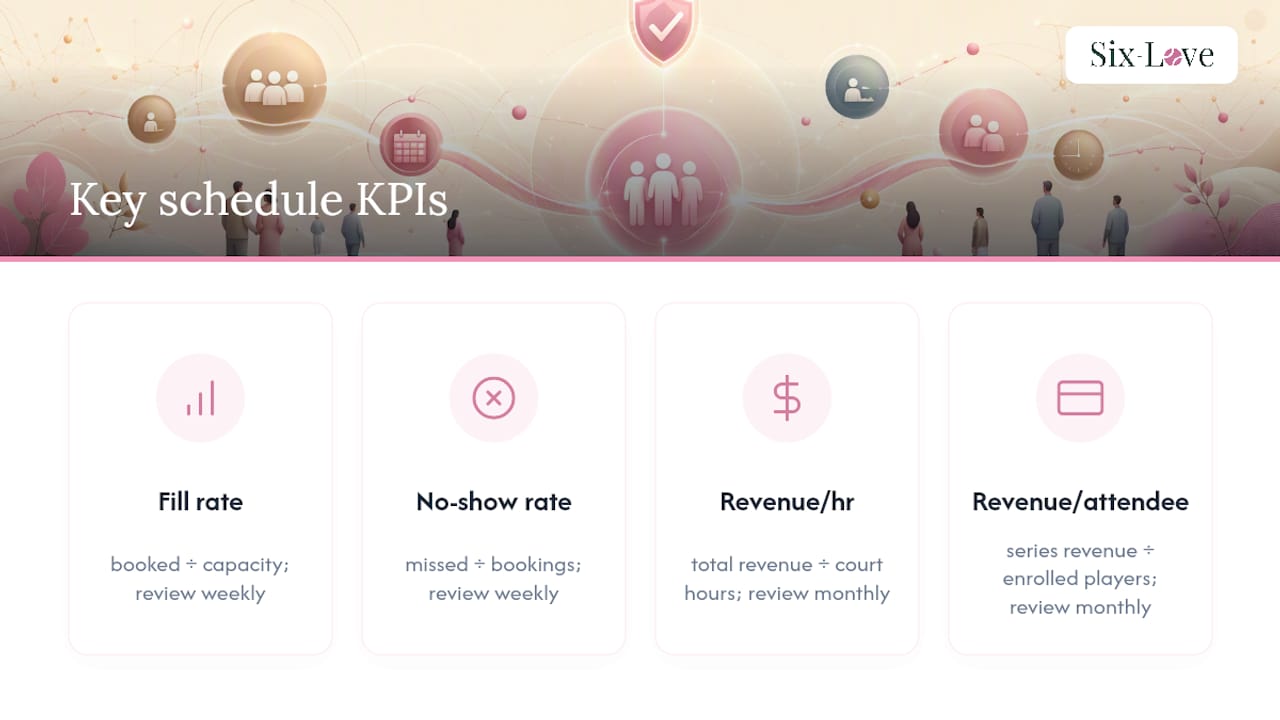
Four numbers matter more than the rest. Fill rate is booked spots divided by available capacity per session. No-show rate is missed bookings divided by total bookings. Revenue per court hour divides total clinic revenue by hours the court was in use. Average revenue per attendee divides total series revenue by enrolled players, which tells you whether your pricing tier is actually working.
Review fill rate and no-shows weekly; review revenue per court hour and conversion from intro clinics monthly, when you’re deciding whether to add or cut a format.
An implementation checklist for launching group clinics
Run this over four to eight weeks rather than trying to flip the switch overnight.
- Week 1: Audit current clinic formats, court utilisation and where double-bookings happen most
- Week 2: Design clinic formats and pricing tiers, including at least one outcome-packaged series
- Week 3: Set booking rules, advance windows, deposits and waitlist logic
- Week 4: Configure coach and court calendars on one centralised grid
- Weeks 5-6: Train front-desk and coaching staff on the new booking flow
- Weeks 7-8: Pilot with existing members first, since internal programme launches convert better than external campaigns, then open bookings club-wide
In the first 60 days, expect fill rate and no-show numbers to move before revenue catches up…
| Metric | Target after 60 days |
|---|---|
| Fill rate | A fill rate above typical club targets on flagship series |
| No-show rate | A moderate no-show rate considered manageable |
| Revenue signal | Early uplift, consistent with the 22% two-month gain some clubs report |
A head pro’s note on rolling this out
Our biggest hiccup wasn’t the software. It was two coaches who kept booking clinics off-platform “just this once,” which recreated the exact clash we were trying to fix. What solved it was making the coach calendar the only place bookings could exist, full stop. For members, send one clear email explaining the new system before launch, not three confusing ones during it.
— Darren
Get the booking system built around your clinics, not the other way round
Spreadsheets and generic booking widgets force you to bend your clinic formats to fit the software. Six-Love works the other way round: a bespoke, white-label reservation system built for tennis, padel and pickleball clubs specifically, configured around how you actually run clinics, not a template someone else designed for a gym.

That means the coach-plus-court tie-up, waitlist automation, and revenue-per-court reporting covered in this guide come built in rather than bolted on. It’s also why clients have reported a 22% revenue increase within two months of switching. If you want the full feature set or run a padel-only or pickleball-only operation, there are dedicated setups for padel court booking and pickleball scheduling. Check current pricing and plans to see what a bespoke rollout would cost for your club.
Sources
For programme design ideas that translate well from other group-fitness settings, the Fitness Flow blog covers class scheduling and membership programming. On payments and package handling, Six-Love’s own guide to integrating payments into club software is worth a read, alongside the club data reporting piece for KPI tracking templates.
- Programming Playbook: Recurring Revenue | TopSpin Digital
- Optimizing Tennis & Padel Clubs with Sports Scheduling Software
- Racquet Sports Club Software | Appointible
FAQ
What is the ideal length for a clinic series?
Four to eight weeks works best for most skill-based programmes, with sessions running 60 to 90 minutes depending on the sport and group size.
How far in advance should members book group clinics?
Seven to fourteen days is a common advance-booking window, paired with a cap on active bookings per member to keep access fair during peak demand.
Does group clinic scheduling software need to support multiple sports?
Yes, if your club runs tennis, padel and pickleball on shared courts, since capacity rules and session lengths differ by sport. Six-Love supports all three within one configurable platform.
Recommended
- General · Six-Love Blog
- Why clubs track court booking history: a practical guide
- The Hub · Six-Love | Insights for Racquet Clubs
Frequently Asked Questions
What is the ideal length for a clinic series?
Four to eight weeks works best for most skill-based programmes, with sessions running 60 to 90 minutes depending on the sport and group size.
How far in advance should members book group clinics?
Seven to fourteen days is a common advance-booking window, paired with a cap on active bookings per member to keep access fair during peak demand.
Does group clinic scheduling software need to support multiple sports?
Yes, if your club runs tennis, padel and pickleball on shared courts, since capacity rules and session lengths differ by sport. Six-Love supports all three within one configurable platform.