How to Build a Profitable Padel Club: The Operational Reality
When you set out to build a padel club from scratch, the immediate temptation is to treat the project as a simple real estate and court installation exercise. Having spent over 25 years around racquet sports and business, working across committees, boards, and international venues, I've learned that court hire alone is only part of the story. To build a padel club that flourishes, you must maximise spend per customer across coaching, hospitality, and events, while maintaining direct control of your booking data rather than surrendering it to marketplace apps that route players to local competitors. Balancing court utilisation with secondary spend marks the exact line between commercial solvency and early closure.
A lean UK indoor venue carries average annual operating cost of over £350,000, creating a weekly revenue requirement of almost £7,000. At an assumed court hire rate of £30 per court, you need 5 hours of court occupancy per day across the board just to break even. Empty off-peak hours drain working capital, while outdoor setups let bad weather wipe out entire weeks of evening bookings. A viable club is an active social hub with an athletic facility attached, never a cluster of fenced courts left on autopilot.
Planning missteps and software traps decide whether an operator makes it past year two. Buying property without ironclad municipal approvals freezes capital in unusable dirt. Similarly, routing bookings through aggregated apps teaches your local community to shop around for whichever rival venue opens a slot ten minutes earlier. The operators who succeed treat court construction as a fixed entry fee, then protect their margins through food and beverage, coaching, and proprietary member retention.
Defining the Core Mechanics of a Modern Padel Club
A padel club is an opportunity to bring people together to play a social sport that is great for fitness. But the revenue generated from the padel courts should never be the full story. At its baseline, padel is a doubles racquet sport played within an enclosed court roughly a third the size of a standard tennis court, bounded by toughened glass walls and steel mesh. The enclosed design keeps the ball in play longer than tennis, flattening the learning curve and creating an immediate social loop. Four players share a compact 10-metre by 20-metre footprint, which allows operators to fit three courts into the space required for a single traditional tennis court.
That density creates the illusion of effortless revenue. It leads new operators to calculate theoretical returns based on 100 percent court use across 16 hours a day. The physical reality of the sport contradicts that spreadsheet math within the first month. Padel thrives on social interaction, community matches, and repeated group sessions. If a facility only provides a turnstile, a net, and an automated payment terminal, players treat it as a commodity utility. The moment another operator opens closer to their office or charges £2 less per hour, those players disappear.
Retaining membership requires giving players plenty to do beyond booking sixty minutes of uncoached court time. That means organizing internal leagues, level-based social mix-ins, junior clinics, events that enable friendships and competitive play. When players build relationships in your club and have lots to do, it boosts court time. This also requires integrating additional facilities that capture secondary spending, including cafes, dedicated workout spaces, locker rentals, and on-site pro shops for equipment sales and racquet hires to name just a few.
When ancillary services are missing, the business model breaks under the weight of operational overhead. Court hire fees must cover lease costs, staff wages, insurance, heating, lighting, and court maintenance. In urban centres, those fixed costs leave razor-thin margins. A modern club must function as a hospitality destination where the court is simply the initial hook.
Site Acquisition, Planning Permission, and Property Realities
Securing a site is the single biggest operational bottleneck in developing a club. The primary reason projects collapse before ground breaks is not a lack of funding, but municipal planning refusal. In many countries, the specific commercial or recreational permissions needed for a commercial racquet facility can never be guaranteed before purchase. If you commit capital to an industrial warehouse, agricultural parcel, or brownfield plot before securing zoning approval, you risk owning an expensive asset you cannot use.
You must hire a reputable local planning consultant before purchasing property or signing an unconditional lease. A specialist consultant will assess:
- Acoustic impact: The repeated crack of solid composite padel racquets against balls and glass walls creates a distinct percussive sound that triggers noise complaints from nearby residential zones.
- Traffic and parking capacity: Municipal councils calculate traffic density based on continuous four-player turnover every 60 to 90 minutes per court, requiring adequate on-site vehicle capacity.
- Structural roof height: Indoor conversions require clear vertical clearance to prevent players from hitting structural beams during lobs.
- External structural modifications: Groundworks, external steel frame installation, light spill from evening floodlights, and clubhouse additions all require specific local permissions.
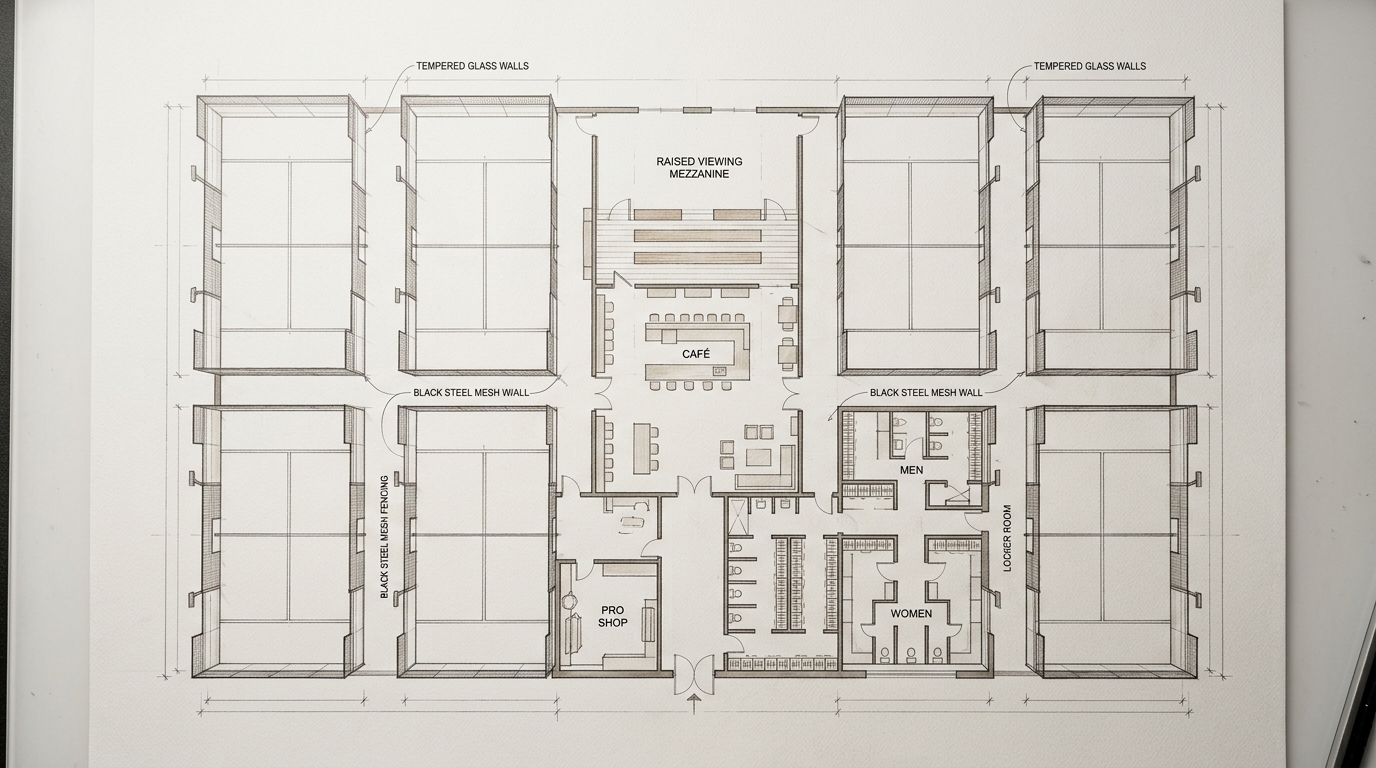
Industrial warehousing is the most sought-after asset class for indoor conversions, but it comes with strict spatial constraints. A functional commercial venue close to an urban centre requires at least 12,000 square feet of unobstructed space to house six courts alongside minimum operational amenities. Clear internal ceiling height must reach at least 7 metres across the playing area, with 8 to 9 metres being preferable for competitive play. Older light-industrial units often feature support pillars on narrow grid lines. Dropping a steel pillar into the middle of a run-off zone voids the court layout entirely.
Outdoor developments present a different set of planning hurdles. Ground suitability assessments must precede foundation work, requiring a continuous 0.5 to 1.0 percent fall across macadam slabs for effective rainwater runoff, alongside soil load-bearing tests to support heavy steel canopy footings. Planning applications near residential boundaries will also require acoustic reports demonstrating that match play remains under local 50-decibel night-time ambient noise caps. Neighbours who tolerate a quiet open lawn will actively resist the light spillage from 200-lux to 300-lux LED floodlights operating until 10:00 PM on weeknights. Planning officers will scrutinise parking provisions, requiring proof that your site can absorb 24 to 32 cars arriving and departing simultaneously between peak booking slots.
Facility Fundamentals and Weather Mitigation
Cutting corners on court construction creates immediate safety hazards and damages player retention. The structural integrity of the enclosure is non-negotiable. Padel involves players routinely sprinting into the perimeter walls, colliding with the glass, and pushing off the mesh to recover smashes. Tempered glass must measure at least 10 millimetres in thickness for standard installations, with 12 millimetres required for high-wind outdoor environments or panoramic competition designs that omit intermediate steel pillars.
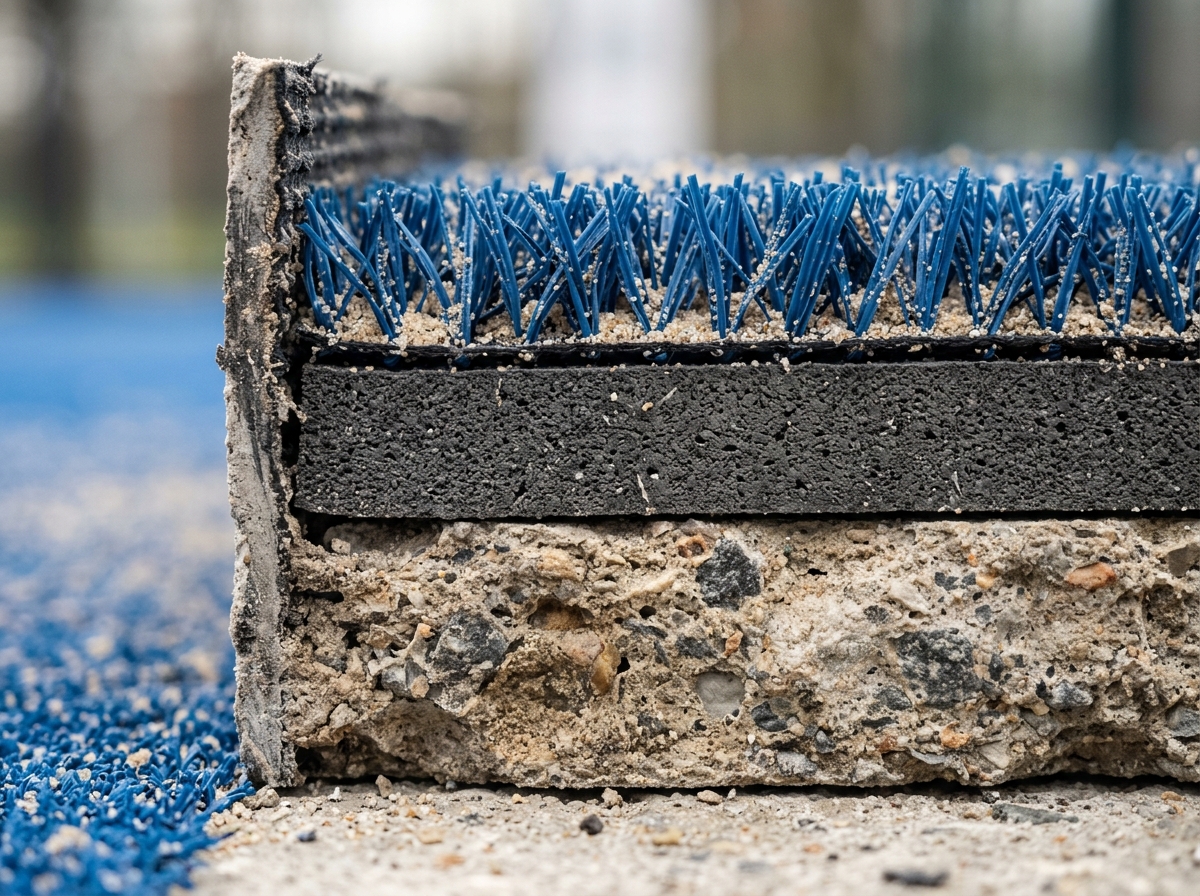
Sub-base preparation is where poor operators throw away their capital. I have seen some clubs try to save money on floor preparation, leaving the playing surface terribly hard on players' knees and feet. In one case nearby, that exact shortcut led to the club closing down entirely because players constantly avoided it due to injuries, and I certainly preferred playing at a venue with a proper shock-absorbing base.
A high-performance court requires an engineered, porous sub-base consisting of macadam or reinforced slab concrete laid with laser-guided precision. Any deviation greater than 3 millimetres across a three-metre straight edge creates dead bounces, puddling, and irregular ball flight paths. Over that base, the choice of artificial turf dictates the speed of the game and the mechanical stress placed on the lower body. Textured, monofilament synthetic turfs with micro-sand infill provide uniform traction while allowing players to slide safely without catching their joints.
Lighting must be engineered specifically for high-velocity racquet sports. Standard warehouse floodlighting creates glare that blinds players tracking high defensive lobs. Purpose-built LED systems mounted on dedicated 6-metre to 8-metre corner columns deliver uniform illumination without casting shadows across the service line. Light levels must consistently register at least 200 lux for recreational play and 300 to 500 lux for sanctioned club tournaments.
Weather mitigation defines the commercial lifespan of outdoor venues. An outdoor club located in a temperate climate with regular rainfall will lose 30 to 40 percent of its peak operating hours to wet turf and soaked glass. When water coats the exterior of the tempered glass, the ball skids down the surface instead of rebounding upward, rendering standard play impossible.
Canopies and indoor warehouses eliminate this problem entirely. While an enclosed canopy structure increases upfront capital expenditure by £20,000 to £45,000 per court compared to an open-air installation, it protects recurring revenue. A covered court ensures that league fixtures, private coaching blocks, and recurring evening leagues run without cancellation, regardless of season.
The Economics of Operating a Padel Venue
The upfront construction cost of a court is only the entry ticket into the market; long-term survival depends on managing daily operational overhead against realistic occupancy rates. To run a profitable business, you must understand the exact cash requirements of operating an indoor site week in and week out.
In the UK, housing a six-court indoor club requires at least 12,000 square feet of clear industrial space, which covers the playing enclosures and basic amenities while excluding extensive hospitality areas. On a lean operational budget, annual overheads top £350,000 once you factor in commercial rent, business rates, staff wages, court lighting, insurance, and booking software. That cost profile demands a weekly revenue run-rate of almost £7,000. To hit break-even at a blended yield of £30 per court hour—balancing £40 to £50 peak evening rates against £20 discounted morning slots—every court must log at least five paid hours daily across seven days.
Peak hours run reliably from 5:30 PM to 10:00 PM on weekdays and through weekend mornings, yielding roughly 4.5 hours of high-demand occupancy. If your club sits empty from 9:00 AM to 5:00 PM Monday through Friday, your average occupancy will fall below the break-even threshold.
To bridge the gap between peak demand and the five-hour break-even mark, operators must actively program the daytime schedule:
- Corporate memberships: Sell dedicated midday blocks to nearby corporate offices for employee wellness sessions between 12:00 PM and 2:00 PM.
- Off-peak coaching clinics: Run beginner foundations, technical stroke clinics, and tactical positioning classes targeting players with non-traditional work hours.
- School and university partnerships: Contract local educational institutions to use open courts during low-demand morning slots at a discounted block rate.
- Senior and retiree social mix-ins: Organise fixed morning round-robins with integrated coffee and breakfast packages to guarantee consistent off-peak foot traffic.
Booking Software Architecture Versus Marketplace Apps
The most consequential operational mistake made by new club owners is outsourcing their customer interface to aggregated marketplace platforms. Many operators rely on marketplace apps hoping for instant foot traffic. While third-party aggregators fill off-peak courts early on, they trap your venue inside a shared directory where customers stay loyal to the app rather than your brand. Building your own branded booking flow demands more initial setup. But it ensures that every customer you acquire remains yours rather than being routed to a neighbouring club the moment your prime slots fill up.
Having sat on committees and boards of various clubs and having played in multiple countries across the world, I identified the need for a booking and management system without having to rely on marketplace apps, which restrict a club's potential.
Marketplace apps like Playtomic operate on an aggregator business model. Their primary allegiance is to the player, not your balance sheet. When a customer opens an aggregator app, they are presented with a geographical map displaying every competing venue in the territory. If your 7:00 PM slot is booked, the app redirects that customer to the club down the road. Furthermore, marketplace platforms charge transaction fees or subscription percentages on court bookings, slicing into an already tight margin. Similar marketplace and booking platforms including MATCHi, Padel Mates, and Anybuddy aggregate demand across multiple clubs, making it easy for players to compare facilities but keeping player loyalty tied to the platform. If a new club opens in your area, it's an instant reduction in your revenue. All those members you worked hard to attract aren't really your members, they belong to the app.
The alternative category consists of dedicated club management and white-label platforms. Systems like our own (six Love) and CourtReserve offer club management software with branded custom mobile applications. Bookaball operates as a white-label booking engine across the UK, Netherlands, Germany, Belgium, and the Czech Republic. By using a dedicated padel club management platform under your own brand, you protect the venue's direct commercial relationship with its player base:
- Data ownership: You collect phone numbers, email addresses, and playing frequencies directly, allowing you to run targeted retention campaigns without third-party filters.
- Player matchmaking: Your platform can pair players of equal skill ratings within your own venue, building social groups that stay anchored to your physical site.
- Custom subscription tiers: Implement recurring monthly memberships, off-peak passes, and loyalty perks that cannot be undercut by neighbouring clubs on an open directory.
- Ancillary billing: Integrate pro shop retail, coaching fees, locker hires, and event tickets into a single checkout flow.
Relying on an app directory makes your business fragile. Owning your booking platform ensures that every pound spent on local marketing builds long-term customer equity for your brand alone. To enhance this further, Six Love doesn't just white label your booking and management system. Not all clubs are the same. We custom build your booking and management system to include all your facilities and unique operations in a truly bespoke system.
Community Programming, Hospitality, and Soft Openings
Profitable venues generate significant margin outside the 200-square-metre playing cage. Food, beverage, and retail sales transform padel from an hourly utility rental into an ongoing hospitality experience. Padel matches take ninety minutes to complete, and because the sport is inherently social, players naturally want to sit, review points, and have a drink afterwards.
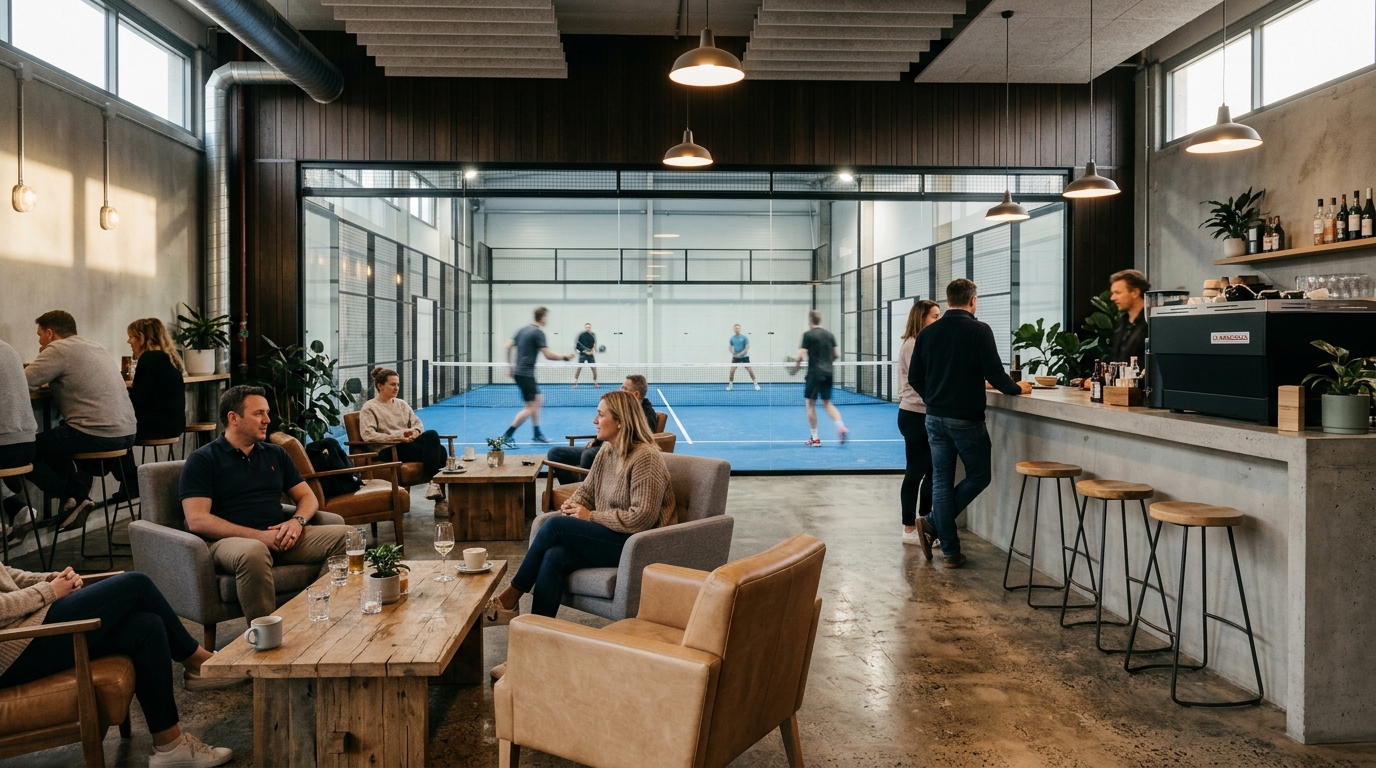
If your venue offers nothing more than a vending machine and a plastic bench in a hallway, those players will pack their bags and head to a local pub, taking high-margin hospitality spend with them. By incorporating a dedicated cafe, sports bar, or kitchen serving fresh food alongside quality coffee and alcoholic beverages, you capture that secondary spend on-site. Social viewing spaces overlooking the glass back walls turn spectators into players and keep players in the building for two to three hours per visit.
How you launch these hospitality and court features dictates your initial momentum. Running a controlled soft opening keeps court volume manageable while staff test booking workflows, court turnstiles, and hospitality service under live conditions. Communicating the official opening date in advance sets realistic player expectations during initial teething issues, while building anticipation for the full launch event. Never open directly with an unvetted public launch party. Teething issues during an unpractised first night create poor impressions that permanently deter prospective members.
Following the exhibition match, use the collected player contact details to funnel attendees straight into structured play. Operators who spend launch week securing immediate sign-ups for ongoing leagues and coaching blocks consistently lock in predictable monthly recurring revenue before their second month of trading.
Execution of the operational rollout follows three distinct phases:
- Controlled soft opening (Weeks 1 to 2): Open exclusively to invited local players, corporate partners, and family members. Test court gate automation, court lighting controls, pro shop point-of-sale systems, kitchen prep workflows, and software check-in processes under manageable foot traffic.
- The grand opening event (Week 3): Host an exhibition match featuring top-tier regional players, offer complimentary 20-minute coaching assessments, supply sample food from the kitchen, and bring in local media and business owners to create community visibility.
- Structured programming rollout (Week 4 onwards): Convert opening attendees into structured programs by enrolling them in introductory group clinics, internal rating ladders, and weekend tournaments.
Building a durable padel business is an operational marathon, not a real estate sprint. If you rely on marketplace shortcuts, ignore the weather, and skimp on floor preparation, your facility will face high churn and crippling repair costs within 18 months. Secure your planning permissions with an expert before you spend on land. Protect your weekly schedule with covered or indoor courts. Take the hard path of building your own branded booking engine so your player relationships belong entirely to you. Pair that physical asset with structured programming and hospitable social spaces, and you will build a venue that stays profitable long after the initial novelty fades.
FAQ
How do you handle acoustic insulation for indoor padel clubs located near residential areas?
As I noted to the municipal planning committee during our latest site review, acoustic dampening requires acoustic blankets along the perimeter walls and double-glazed glazing units rather than standard single sheets.
What is the realistic lifespan of outdoor padel court artificial turf before it needs total replacement?
Under heavy daily tournament play and local weather exposure, textured monofilament turf typically degrades around the five-to-six-year mark before backing breakdown requires a full re-carpeting.