How to Build a Low-Maintenance Garden Using Composite Materials and Tough Plants
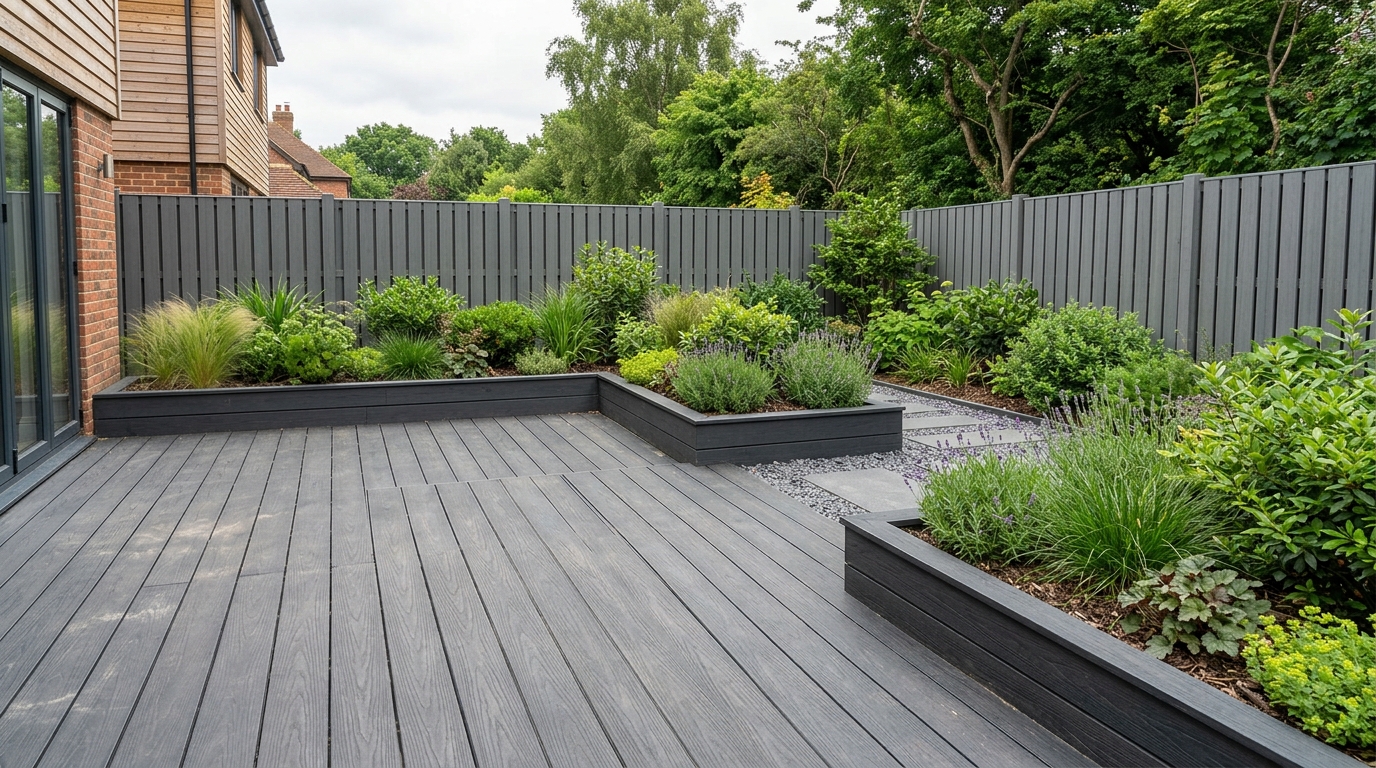
If you spend Saturday mornings pulling weeds from paving joints and repainting rotting timber fence panels, you do not own a garden; it owns your weekend. In plain terms, a truly low-maintenance garden is an outdoor space that requires the absolute minimum amount of upkeep from the owner. You should not need to hire a professional gardener or spend your weekends wrestling with endless garden work.
The direct fix comes down to swapping high-rot timber and thirsty turf for composite cladding, durable fencing, artificial grass, and resilient planting. On an average-sized UK home, pulling off that transition takes approximately two weeks of structured groundwork and assembly, working to a realistic budget of £40 per square metre for composite materials and tough plants. Getting there requires making deliberate choices before you touch a shovel, starting with the surfaces that absorb the most maintenance.
What Low Maintenance Actually Means for Your Weekends
When you want a garden that does not demand every spare Saturday, material choices dictate everything that follows. Most garden products sell purely on showroom gloss, hiding the reality of seasonal upkeep until the first wet winter hits. Real low-maintenance design removes the recurring labour cycles that turn homeownership into an unpaid second job.
Softwood rots fast.
Running Deck Kingdom, I see the same pattern constantly: traditional softwood decking and standard overlap fencing begin degrading the moment they face damp soil and driving rain. Within two years, you are locked into pressure washing, sanding, and coating them with preservative.
As I often say to clients who ask what low upkeep really means:
"A truly low-maintenance garden is an outdoor space that requires the absolute minimum amount of upkeep from the owner. You shouldn't need to hire a professional gardener or spend your weekends wrestling with endless garden work."
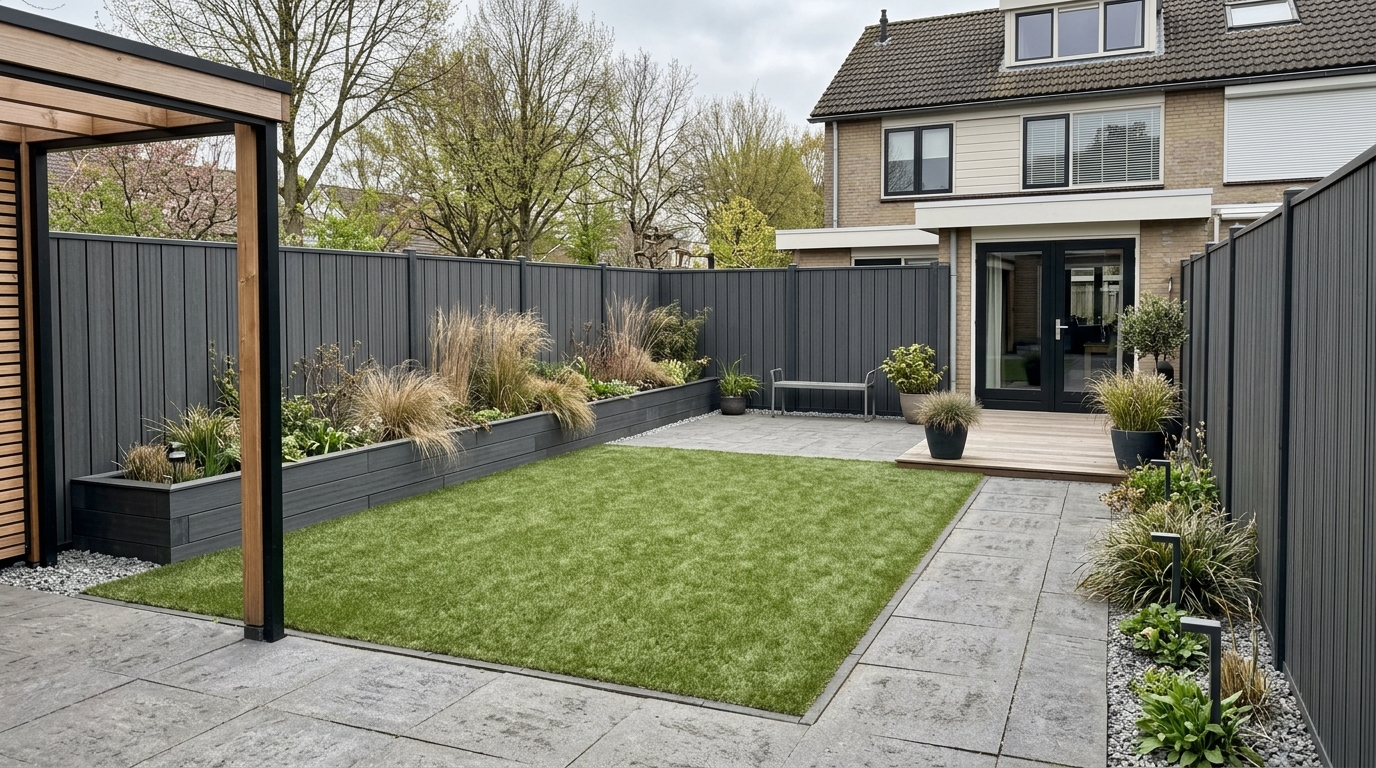
Composite materials eliminate that entire cycle. Because they combine recycled plastics and reclaimed wood fibres, composite cladding and fencing boards do not absorb moisture, split along the grain, or provide a food source for fungal rot.
The Most Dangerous Mistake DIY Gardeners Make with Fencing
Across dozens of boundary installations, one single error accounts for nearly every failure I get called out to inspect. When neighbours ask why their new boundaries lean after winter storms, I tell them straight:
"Across a fair few weekends helping DIY gardeners and landscapers sort out their boundaries, I frequently see that they don't sink their fence posts into the ground deep enough, which can cause severe problems further down the line."
People assume that because composite posts are rigid, they behave just like lightweight featheredge timber panels. Composite panels are much denser and heavier than basic softwood panels, and a closed composite fence acts as a solid sail during autumn and winter storms. When posts are set shallow in loose topsoil, winter gales put brutal strain on the base.
Shallow posts fail.
On one job, the ground was very wet and the fence posts simply did not hold because the soil was moving around due to too much water. That ruined an entire run of posts. You have to ensure everything is dry before digging your fence post holes, or you end up pouring concrete into shifting sludge.
To anchor a composite boundary properly, you must dig post holes down to at least 600 millimetres, or roughly a third of the above-ground post height. Rent a mechanical hole borer instead of using a hand shovel. That machine will massively increase your efficiency by reducing the amount of time it takes to dig holes for fence posts, especially in heavy clay. Bed the bottom of each hole on 50 to 100 millimetres of coarse drainage gravel so water does not pool under the post foot, then anchor it with fast-setting post concrete before fixing a single board.
A Realistic Two-Week Timeline for a Complete Garden Overhaul
Attempting to overhaul an outdoor space in disconnected weekend fragments usually leads to muddy, half-finished ground that stalls out for months. You get far cleaner results by treating the project as a focused, sequential build.
Transforming an average UK plot requires fourteen consecutive days of structured site clearance, sub-base compaction, framework erection, and cladding installation.
Here is the exact progression across those fourteen days:
- Clearance and groundwork preparation (Days 1 to 3): Strip out dead turf, old flagstones, and rotted wooden structures down to clear subsoil. Dig out unwanted roots completely rather than cutting them off at ground level where they will rot and cause sinkholes later.
- Sub-base installation and framework setting (Days 4 to 7): Prepare the ground work by spreading and compacting a 75 to 100 millimetre MOT Type 1 aggregate base for any paved or artificial grass zones. Set the fence posts deep into concrete, and build the treated timber framework for decking and cladding areas.
- Cladding and surface installation (Days 8 to 11): Fix the fencing panels to the posts and mount the composite cladding to the timber framework. Work from the boundary perimeter inward so you never carry heavy boards across newly finished surfaces.
- Planting and dressing (Days 12 to 14): Cut clean X-shaped planting pockets through heavy-duty weed membranes, fold the flaps back to dig your hole, and ring the base of each stem with a 50-millimetre collar of pea shingle so wet slate mulch never rests against the plant crown. Bed drought-tolerant specimens like Stipa tenuissima, Phormium tenax, and Viburnum tinus with compost, and finish the soil beds with a 50-millimetre layer of slate chippings or bark mulch.
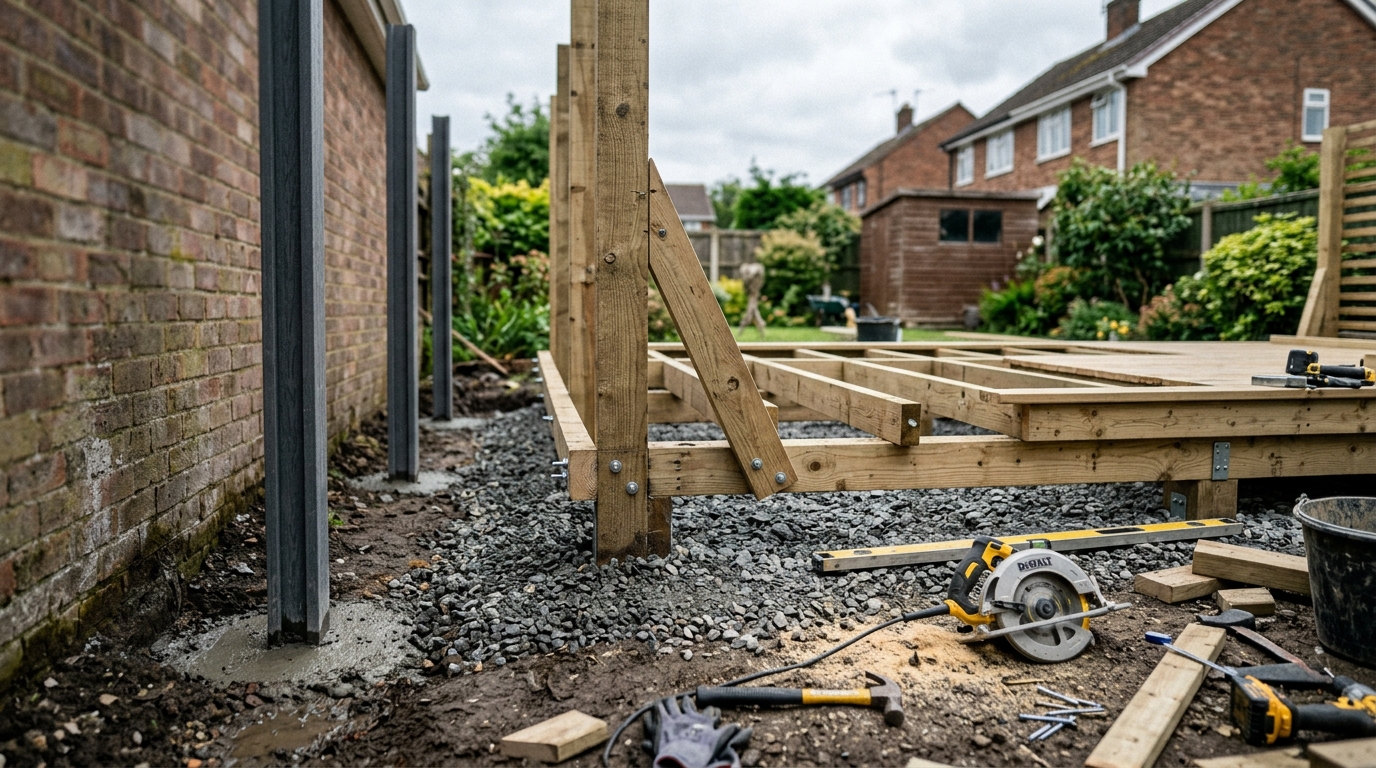
Spending those two weeks on proper groundwork buys back your weekends for years to come. It suits homeowners who want clean boundaries, no mud, and zero mowing.
Breaking Down the Numbers on Composite Materials and Tough Plants
Good garden design manages upfront material costs against future maintenance hours. Cheaper materials are almost always an illusion because they demand steady purchases of sealants, stains, spare timber, and replacement plants year after year.
The maths holds up.
I recommend £40 per square metre for a garden, which will upgrade it to full composite materials and include tough, low-maintenance plants. That allocation covers the core materials required to strip out decaying softwood and patchy lawn across an average footprint.
| Project Component | Allocation per m² | What It Delivers |
|---|---|---|
| Composite Surfaces & Fencing | £24 | Tongue-and-groove composite boards, cladding panels, and matching trims |
| Sub-base & Framework Timber | £9 | Structural sub-frames, weed barriers, and aggregate drainage base |
| Resilient Greenery | £7 | Hardy architectural shrubs, ornamental grasses, and mulch groundcover |
On a modest 50-square-metre plot, a £2,000 material budget lets you run composite cladding along exposed boundary walls, install durable fencing runs, and lay a resilient sub-base for artificial turf. Sticking to that budget requires strict discipline during ground preparation, ensuring you do not waste money buying premium decorative materials before your drainage and sub-frames are structurally sound.
How to Get Started This Weekend
Tackling a garden overhaul yourself means trading two weeks of hard physical labour for years of freedom from weekend chores. Start by measuring your perimeter running metres and calculating the aggregate tonnage you need delivered, then hire a mechanical hole borer to punch out your post holes before bringing in a plate compactor for the sub-base. Never skimp on post depth, anchor your timber sub-frames firmly, and finish your beds with heavy weed membrane and stone mulch before setting your resilient plants so the maintenance cycle simply stops.
FAQ
How do you keep composite boards clean without a pressure washer?
A bucket of warm water, mild household detergent, and a soft-bristled sweeping brush will clear typical surface dirt, fallen leaves, and winter grime without marking the composite finish.
Will weeds still grow under the artificial grass and planting beds?
Weeds cannot penetrate from beneath if you pin a 100 gsm woven polypropylene membrane under the aggregate sub-base and lap joints by 150 millimetres. The only routine job is flicking away surface weeds that germinate in the top stone layer from windblown seeds.