← Back to blog 23 June 2026
By Darren Burns, Founder at Six-Love. 30+years in Tech & Racquet sports

For modern tennis, padel, and racquet clubs, court real estate is the primary revenue engine. However, the true heartbeat of member engagement and secondary profitability is the club’s coaching program.
When a facility relies on manual scheduling methods like disparate calendar apps, text messages, spreadsheets, or generic booking widgets, it creates a structural disconnect between player demand, coach availability, and court allocation. This administrative friction directly caps growth, leaves court inventory underutilized, and impacts the overall member experience.
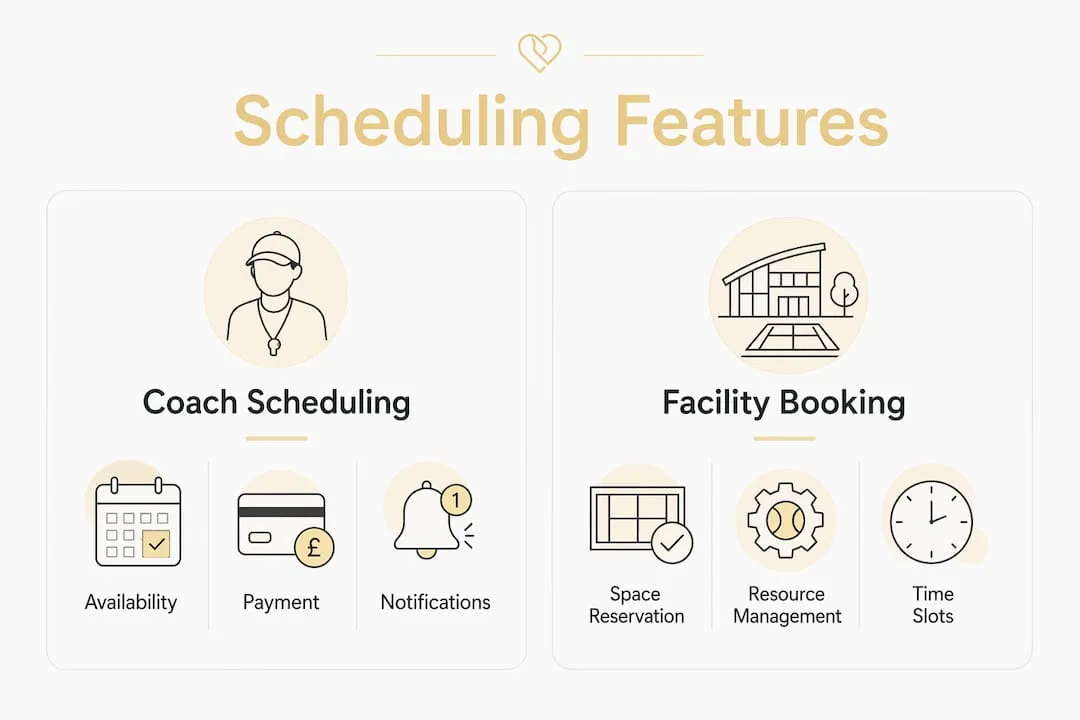
A dedicated coach scheduling system resolves these structural breakdowns. Far from a simple digital calendar, it acts as an operational framework designed to optimize staff utilization, maximize revenue per square meter, and deliver a premium, seamless booking experience for players.
A great coach scheduling system will update calendars in real time to prevent double-bookings. Tools like YouCanBookMe, Zoho Bookings, and Anny.co have made this category mainstream, but they wont cut it when it comes to booking and scheduling coaches for racquet sports like tennis, padel or pickleball. As someone who has spent over 25 years playing, coaching, and operating within the racquet sports ecosystem, I know firsthand the logistical nightmare of aligning classes, private clients, and available court sheets. Far too often, head coaches spend their most valuable morning hours acting as manual switchboard operators by typing out WhatsApp messages and sorting out calendar clashes instead of standing on the court generating revenue. I built Six Love specifically to eliminate this operational strain and permanently elevate how clubs interface with their communities.
The Operational Strain of Legacy Scheduling
Amateur club management often views scheduling as a minor back office task. In practice, coordinating a multi court facility without integrated software architecture introduces systemic vulnerabilities that directly impact a club’s bottom line.
The Court Staff Conflict
A player books a private lesson with a senior coach, but no court is available at that specific hour. Conversely, a court is reserved on the grid, but the assigned coach is simultaneously double booked to lead a junior clinic on the other side of the facility.
The Administration Tax
Operations managers and desk staff waste valuable hours executing manual cancellations, sending manual payment links, and cross referencing bank transfers to verify coaching fees.
Revenue Slippage
Last minute cancellations result in unbilled coaching hours and completely empty courts that could have been filled instantly by a dynamic member waitlist.
When these points of friction compound, staff members burn out on admin work and members face a disjointed booking experience that contrasts sharply with the premium environment they expect when paying club dues.
Structural Requirements What a Premium Club System Must Deliver
Many facility managers attempt to resolve these issues by deploying standard corporate appointment software or generic booking widgets. While these tools function perfectly for a solo business consultant booking a Zoom call, they completely break down inside a sports facility because they cannot handle co dependent resource constraints. A true racquet sports platform requires a specialized architectural layer that standard business tools do not possess.
1. Dynamic Resource and Staff Pairing
A premium club engine must treat courts and coaches as completely interdependent resources. When a lesson is booked, the software must simultaneously lock in the coach’s calendar and hold the physical court space in real time. This automated pairing eliminates double bookings and guarantees that no asset sits idle due to manual administrative errors… The core difference is that end-to-end booking automation covers more than just a simple booking. Its synchronizing, and advertising availability to the end user in an intuitive way.
General scheduling apps like Spond or Calendly work reliably for one-on-one appointments, but they lack the logic required to synchronize court sheets, coach availability, and dynamic clinic headcounts simultaneously. That operational gap is what led us to build Six Love. Group coaching introduces tiered skill ratings and shared court divisions that standard office tools simply cannot parse without manual oversight.
2. Flexible Session Formats and Package Architectures
Club revenue relies on diverse programming. The scheduling framework must fluidly manage tiered coach pricing for private 1 on 1 lessons, split payment capabilities for semi privates, and fixed capacity caps for recurring group clinics, academies, and seasonal camps.
Integrating flexible credit based pack systems or recurring training subscriptions creates predictable, automated monthly cash flow. When our first partner facility went live with the integrated schedule, coaching reservations rose sharply within the first month because players could finally see open clinic slots in real time. For a multi-sport club managing 15 coaches across clay, padel, and hard courts, administrative overhead dropped by roughly 90 percent in eight weeks, while total billed lesson hours increased by 22 percent. The reason was simple because players could instantly view live availability, see how many slots were left in a morning padel clinic, and seamlessly register themselves without ever needing to call the front desk or message a coach to check availability.
FAQ
What is a coach scheduling system?
A coach scheduling system is software that centralises coach availability and client booking, automating confirmations, reminders, and payments to remove manual administration from the coaching workflow.
How does coach scheduling software differ from general booking tools?
General booking tools manage space reservations. Coach scheduling software adds coach-specific availability, session capacity controls, client intake forms, routing logic, and package management that generic tools do not include.
Why do coaches need automated scheduling?
Automated scheduling eliminates manual back-and-forth, protects revenue through upfront payment collection, reduces no-shows with automated reminders, and allows multi-coach facilities to scale without proportionally increasing administrative work.
What features should I look for in coach scheduling software?
Look for real-time calendar sync, automated reminders, online payment and deposit handling, group session capacity controls with waitlisting, multi-coach routing, and resource conflict prevention for shared courts or rooms.
Can one system handle both court reservations and coach session bookings?
Sports-specific platforms like Six-Love are designed to manage both court reservations and coach session bookings within a single system, preventing conflicts across shared resources and session types simultaneously.