Pickleball Club Management Software: Why I Built My Own
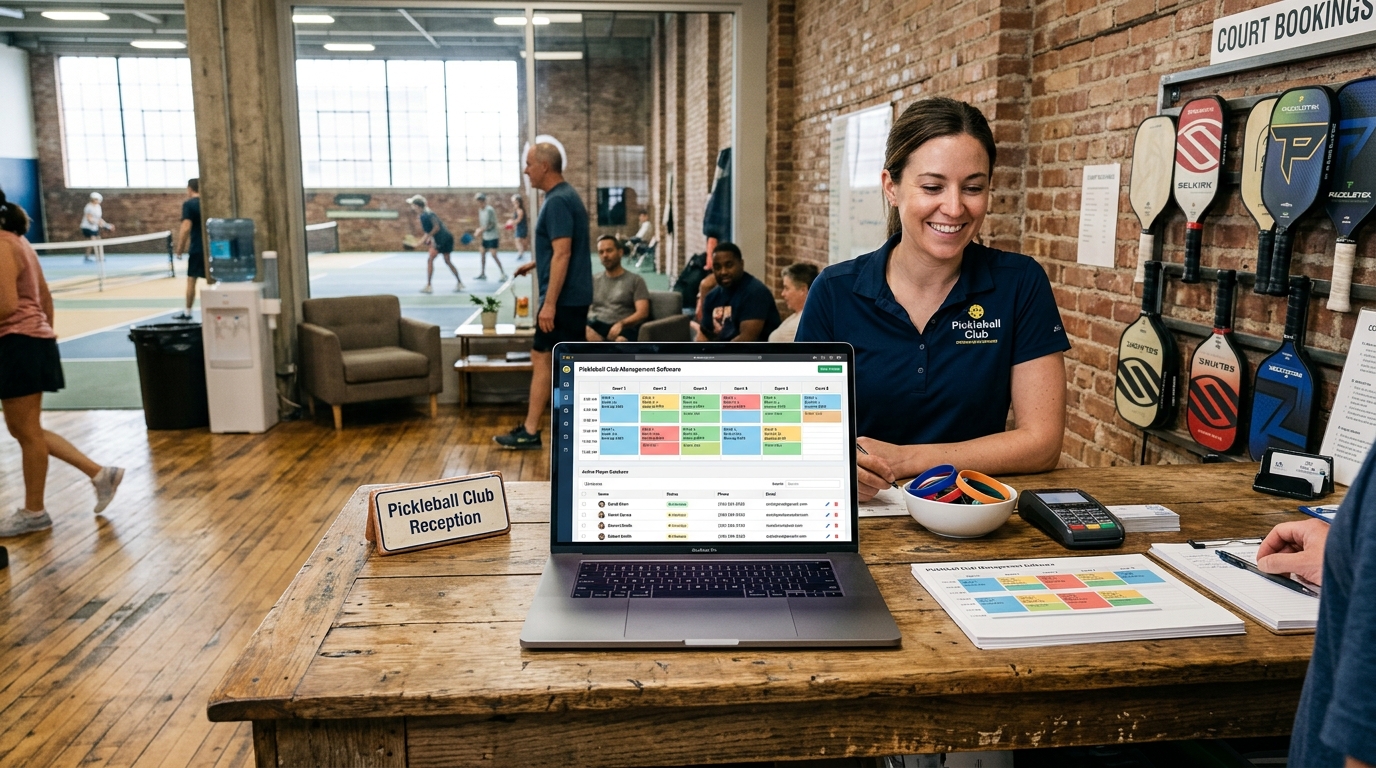
Selecting the right pickleball club management and booking software determines whether a venue retains its players or feeds them directly to local competitors. Third-party directories lure clubs with low monthly subscription fees and off-the-shelf convenience, but they monetize by pitching rival facilities to the very people who booked through your courts.
While building club infrastructure through Six Love, I watched this dynamic drain courts first hand before we shifted to building proprietary systems. When a new competitor opens in your zip code, being on a shared directory can halve your booking numbers overnight. Running your own dedicated platform locks your player community inside your venue, protects your customer data, and stops you from subsidizing your competition.
Understanding the Shift in Pickleball Club Management Software
At its core, rackets club management software handles court reservations, payment processing, membership tiers, and event scheduling under a single digital roof. For years, clubs treated these tools as nothing more than digital grid sheets to replace pen-and-paper ledgers or basic calendar plugins.
That baseline functionality worked when court supply was scarce and players simply needed a designated hour to hit a ball. The operational reality on the ground has changed.
Pickleball is an inherently social, community-driven sport where retention depends almost entirely on whether someone can find games at their specific skill level. Basic booking systems fail here.
All a member sees is a grid of empty or booked courts. When a solo player or an intermediate doubles team signs in and sees nothing that connects them with suitable opponents on events, they stall out.
Operators end up patching this gap by trying to match people manually in chaotic WhatsApp groups. Those chat groups can fall apart quickly because genuine community bonds do not form reliably in crowded, unmoderated group messages, and let's face it, your phone pings a lot.
Modern club management needs to organize active play through open matches, level tagging, and in-house events or tournaments, rather than functioning as a passive cash register.
Why Marketplace Apps Cost Clubs Their Player Base
Marketplace platforms hook venue owners because their pitch sounds painless. Enterprise-grade features, low monthly overhead, and the promise of discovery.
What they fail to mention on the sales call is that you do not own your players when they book through a shared network. Every customer you drive into that application becomes shared inventory across every facility in your postal code.
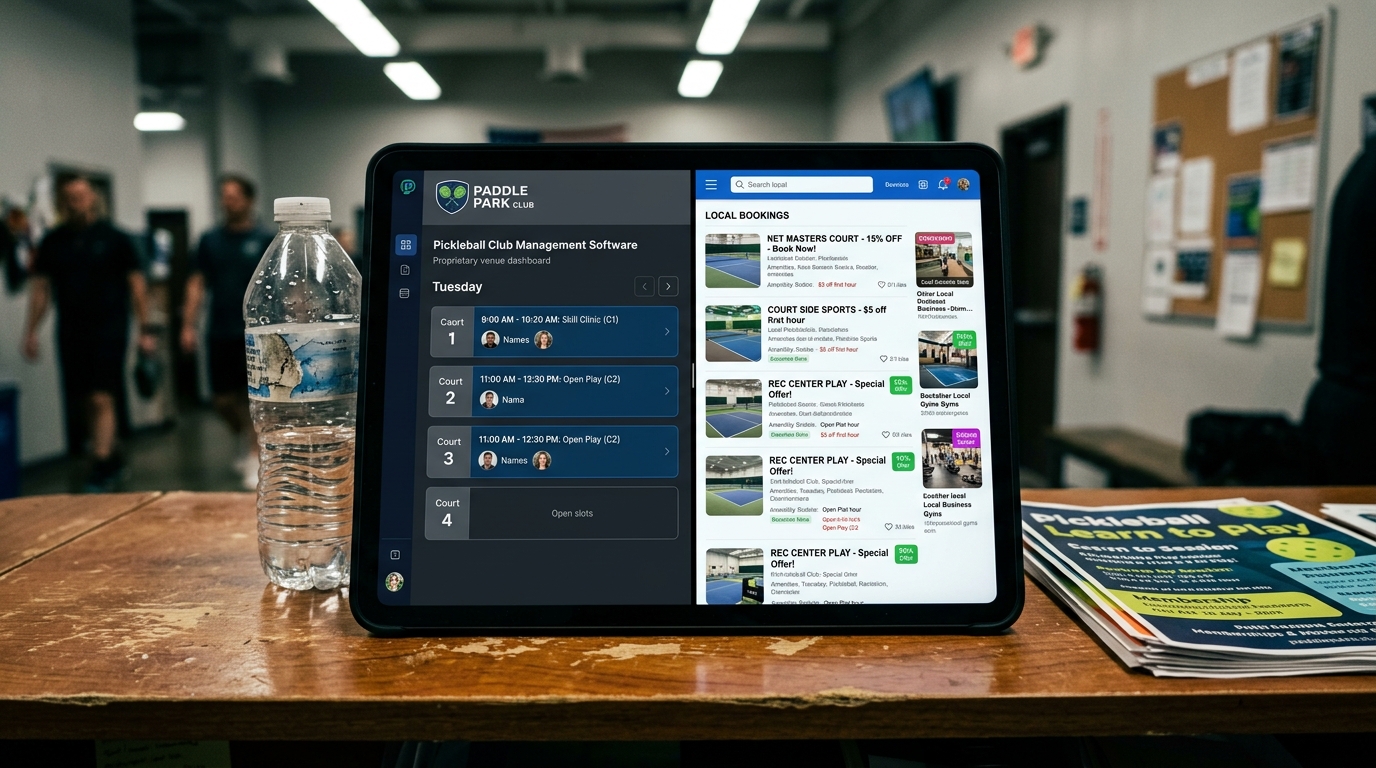
When you invest your time and capital into marketing open houses, intro clinics, and beginner drills, you assume those players belong to your club ecosystem. On a shared marketplace app, the moment that player opens their phone to book their next session, the software actively displays neighboring clubs, often highlighting cheaper court fees or newer indoor facilities down the road.
You pay the subscription fee and do the legwork to acquire the player, while the software actively redistributes them to your direct competitors. The financial consequence is brutal.
Once your local market matures, a shared marketplace app ceases to feel harmless. If you operate in an area with zero competition, it might feel fine for a while.
The problem hits the day another facility opens nearby. When a competing club launches in your territory and you are both hooked into the same marketplace directory, your booking volume can be halved overnight.
Your existing regulars get nudged with notifications for the new venue, splitting your community and bleeding your court use. Operators assume popularity equates to quality, but marketplace software is designed to serve the platform's user base, not your facility's balance sheet.
Evaluating Booking Workflows and Retention Risks
Assessing the true cost of venue infrastructure requires looking at how workflows influence whether players stick around or leave. The differences between a third-party marketplace and a proprietary club setup come down to data ownership, social mechanics, and player retention.
| Operational Criteria | Third-Party Marketplace Apps | Dedicated Club-Branded Platform |
|---|---|---|
| Player Retention | Leaks players by cross-advertising competing local facilities | Locks players inside your venue ecosystem with zero competitor ads |
| Community Matchmaking | Generic booking grids; relies on messy external WhatsApp groups | Integrated open matches, level-based filters, and automated game creation |
| Customer Data Ownership | Platform retains user data and controls external marketing touchpoints | Club retains complete ownership of player profiles and contact lists |
| Event Administration | Basic scheduling with poor multi-sport coordination | Unified backend for running tournaments, clinics, and member leagues |
| Cost Structure | Low entry subscription fees offset by high player churn risk | Higher initial setup effort balanced by protected lifetime member value |
When players struggle to find matches at their level, they walk away from the venue entirely. Dedicated systems solve this by letting players post open matches, declare their skill ratings, and match with other members directly inside the booking flow.
That workflow builds personal relationships.
Once players establish a regular playing group inside your facility, they stay. When that social layer is missing or pushed out to third-party group chats, player churn climbs.
Migrating a Multi-Sport Venue to Bespoke Infrastructure
A practical demonstration of this shift happened when City Padel & Pickle moved away from third-party marketplace infrastructure. The facility had been using Padel Mates, which is a well-known marketplace app, to manage their day-to-day court operations. While their padel players were accustomed to using Padel Mates for arranging matches, management noticed an ongoing operational problem: 75% of users were routinely bouncing to competing clubs because the app actively advertised other facilities inside the core booking flow. The situation was even worse for their pickleball courts.
"Working on Six Love, I watched us migrate City Padel & Pickle onto our custom-branded platform, and within a few weeks of going live, it cleared up their operational bottlenecks."
— Darren Burns - Six Love Founder
Booking activity for pickleball through Padel Mates was almost non-existent because the platform was neither optimized for the sport nor configured to build an active pickleball community. The operators needed a dedicated platform to eliminate that cross-facility leakage across both sports while giving their staff actual administrative control over programming.
Working on Six Love, I watched us migrate City Padel & Pickle onto our custom-branded platform, and within a few weeks of going live, it cleared up their operational bottlenecks. Both pickleball and padel members adopted the new setup immediately. Padel player leakage dropped to just 32% (from 75%) because members were no longer exposed to competing venue directories every time they reserved a court.
Pickleball players felt at home on the new software and over 93% of members were regularly using it to book. On the back end, staff gained a reliable admin system to schedule tournaments, organize developmental clinics, and monitor core revenue metrics across both racquet sports. The venue operators found that moving to private infrastructure resolved their multi-sport scheduling conflicts and prevented their member list from being tapped by nearby clubs.
How to Choose Between Off-the-Shelf Marketplaces and Custom Build
If your club relies on a third-party marketplace to fill courts, you are renting your own player base to the competition. Take back control of your member directory before a rival venue opens down the street and strips your use in half. A marketplace is only worth considering if you have absolutely no ability to market your own venue and refuse to organize events, trading occasional spillover players for shared revenue with every competitor in town.
- Audit your bookings: Pull the last 30 days of reservation logs, isolate unique player emails, and calculate what percentage of repeat weekend bookings originated from external discovery feeds versus direct club URLs.
- Own your data: Export every player email and phone number currently trapped inside third-party directories before migrating to a proprietary setup.
- Build community tools: Ensure whatever booking workflow you adopt includes level-based matchmaking and open play organizing so your players stop relying on messy external chat groups.