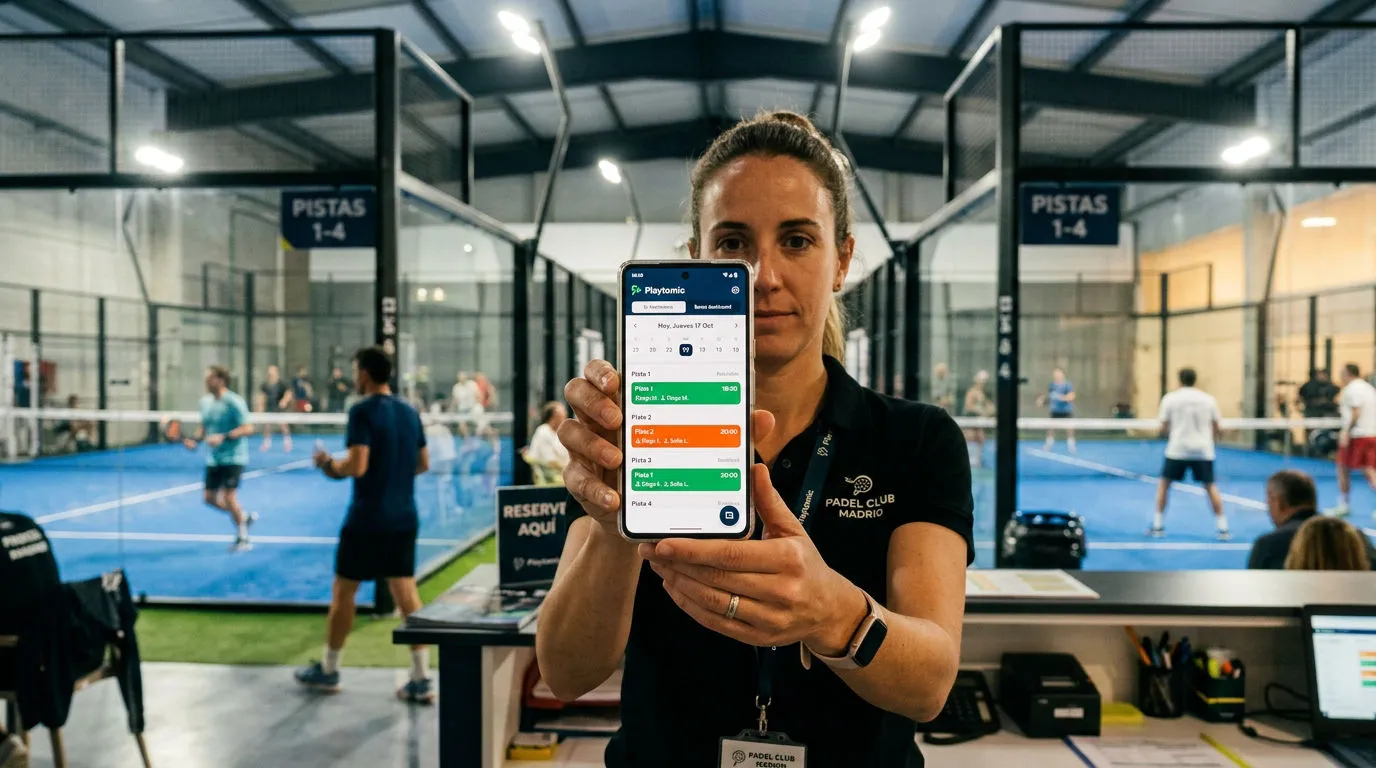
When evaluating Playtomic vs dedicated club tools, the choice comes down to customer ownership versus marketplace convenience. For multi-club operators, my recommendation is to use standalone white-label software like Six Love to retain customer data. A shared marketplace takes up to 5% in club commissions and up to 20% in player surcharges, creating an $80,000 annual hit on a $1 million revenue club while exposing your acquired regulars to nearby competitors. Yes, I am a founder at Six Love, so I look at this through the direct reality of protecting venue margins.
What Racquet Club Operators Need to Know About Marketplace Booking Apps
A shared booking marketplace is a multi-tenant directory where multiple independent venues list their open court slots on a single consumer-facing platform. Players open the app, search a geographical area, and browse available courts across competing facilities, booking and paying through the platform operator. In contrast, proprietary club software is a standalone, white-label digital environment built exclusively for a single venue or club group, carrying your branding, your scheduling rules, and your direct payment processor.
The core distinction lies in player data sovereignty. On shared aggregator apps like Playtomic, Matchi, CourtReserve, or Playbypoint, the player reserving court four on Thursday evening belongs to the platform rather than your facility. You receive a reservation confirmation with a first name and perhaps an initial. But you are barred from receiving the player's email address, direct phone number, or raw profile data. You cannot export that customer list, drop it into your email provider, or send targeted notifications about next week's open social.
That contact blackout creates a structural bottleneck for long-term venue survival. In the racquet sports sector, court hire margins depend heavily on lifetime customer value and consistent repeat visits. When an operator cannot communicate with former players who have gone cold, retention relies entirely on the player deciding to open a third-party app and search for the venue again.
Relying on a third-party aggregator turns your facility into an unbranded supplier of inventory. The marketplace owns the customer relationship, controls the re-engagement messaging, and decides which club appears first when the player searches for a game. If your tennis booking system does not allow you to export and message your own customer base, you do not own your club's community. You are simply renting court time to another company's users.
Calculating the Real Cost of Shared App Commissions and Surcharges
Aggregator pricing looks manageable on paper because the percentage taken directly from the club invoice seems modest. Most operators sign contracts seeing a baseline club-side commission rate of up to 5% per transaction. The real margin extraction, however, occurs through split-fee structures and variable player-side markups that can reach up to 20% of the booking value.
Consider a standard four-player doubles booking for a sixty-minute padel or tennis match. If the court reservation rate is $40, an aggregator taking an average 3% club fee extracts $1.20 directly from your revenue. Though that 3% rate is typically reserved for larger clubs with substantial court volume. The secondary extraction happens when players split the bill inside the app.
When each of the four players pays their $10 share, the platform attaches a convenience surcharge, often around $0.50 per person. Though depending on the specific marketplace and contract tier, that consumer surcharge can run as high as 10% or more. With four players each paying a $0.50 markup, the app collects $2.00 in player fees on top of the $1.20 deducted from the club. That single $40 court booking has generated $3.20 in platform fees, pulling the true take rate to 8%.
"If we look at a typical game of padel or a game of tennis in doubles, there are four players involved. Assume that it's $40 to book a court. Often, an aggregator app will take an average 3% of this, which is $1.20, though that's only really for the larger clubs who get the lowest fees."
| Metric | Single Court Match ($40 Total) | Mid-Sized Facility ($500k Annual) | Large Facility ($1M Annual) |
|---|---|---|---|
| Club-Side Commission (Average 3%) | $1.20 | $15,000 | $30,000 |
| Player Surcharges ($0.50 x 4 Players) | $2.00 | $25,000 | $50,000 |
| Combined Platform Take | $3.20 | $40,000 | $80,000 |
| Effective Extraction Rate | 8.0% | 8.0% | 8.0% |
These small individual charges, commonly dismissed as harmless microtransactions, accumulate into substantial capital outflows over a calendar year. For a high-use facility generating $1 million in gross annual court fees, an 8% combined take rate pulls $80,000 directly out of the ecosystem.
That $80,000 is not reinvested into your club's surfaces, lighting, coaching staff, or clubhouse amenities. It goes entirely to subsidising the technology and user acquisition campaigns of a platform whose commercial objective is to aggregate the entire local playing market. For club operators operating on tight EBITDA margins, carrying that annual drag severely limits cash flow needed for facility maintenance and expansion.
How Marketplace Apps Feed Your Local Competitors
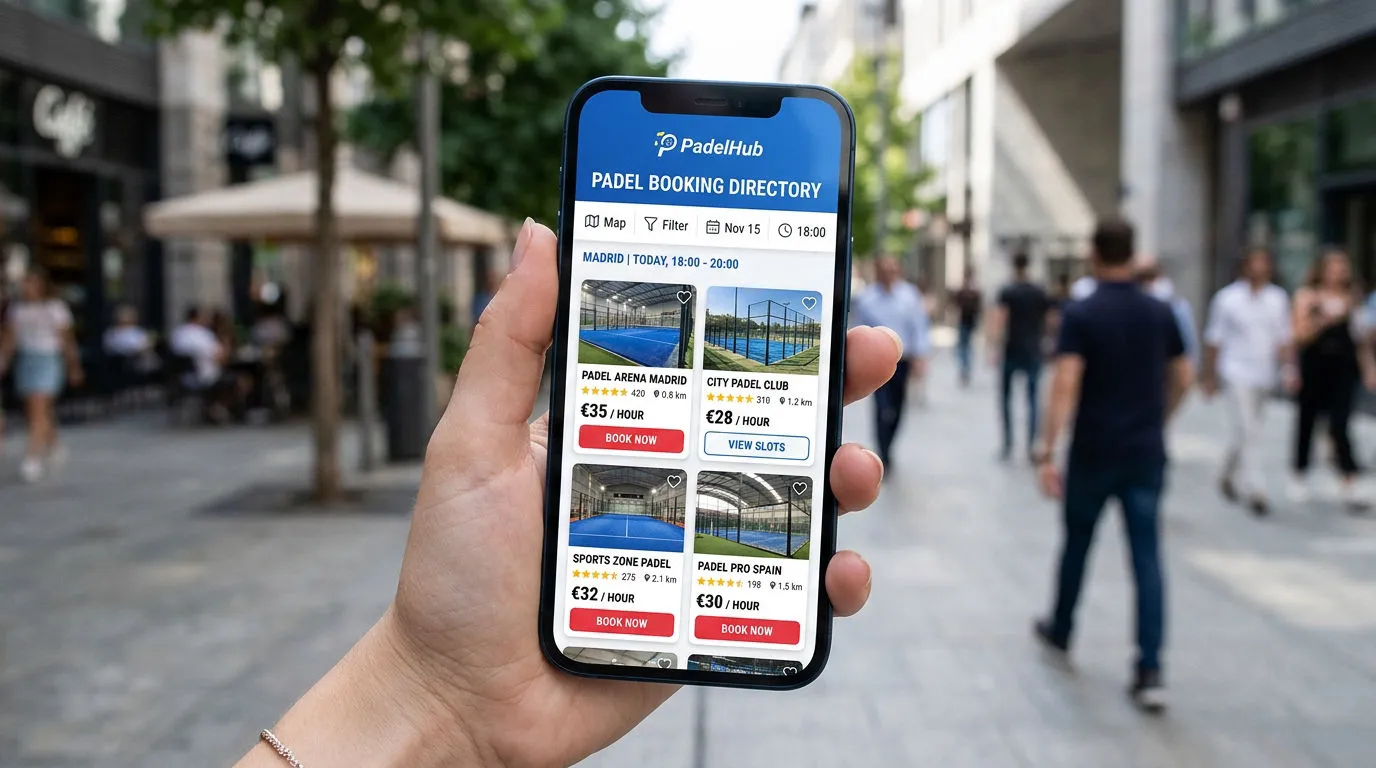
The most damaging operational hazard of listing on a shared marketplace is marketing leakage. When you spend your own operating capital on social media ads, local flyers, or community outreach to attract new players, your goal is to grow your specific club. If those new players are directed to download a shared marketplace app to book their slot, you have paid to acquire a user for a network that immediately promotes your direct competitors.
Proximity search drives shared directory architecture. The moment a player finishes booking court time at your venue, platform algorithms push nearby courts, open games, and discounted slots down the road. Spending $25 in local advertising to acquire a new player loses its impact when the app sends that exact customer a push notification forty-eight hours later for a competing club two miles away.
This dynamic creates an aggressive downward pricing spiral through feed-level visibility. When a struggling competitor in your catchment area notices empty courts on a Tuesday morning, their default reaction is often to slash court fees by 30% or offer heavily discounted open games.
"I'm not aware of any other business where they readily hand over their customer data to their competitors and pay for the privilege."
On a shared marketplace feed, your full-price prime courts sit directly adjacent to your competitor's discounted inventory on the exact same screen. Players browse the listings not on brand loyalty, coaching quality, or facility standards, but on price and immediate time slots. To keep courts full, nearby operators feel compelled to match those cuts, eroding operating margins across the entire local district. By listing in an open public feed, you actively participate in commoditising your own court space.
A Real-World Test of Pickleball and Padel Booking Platforms
The operational differences between a closed, branded ecosystem and a shared marketplace are most obvious when tested within the exact same walls. A club operator we work with in Spain found themselves in this exact position. The venue operated both padel and pickleball courts side by side under one management team.
They were hesitant to pull their padel operations off Playtomic because the app had been their primary directory for years. For their newly installed pickleball courts, however, they had no existing marketplace channel bringing in foot traffic. So they decided to run that entire side of the business through a club-branded white-label system built by Six Love.
To build momentum, the club launched two introductory beginner clinics on the same Sunday morning at the same hour. The padel clinic took reservations exclusively through Playtomic. The pickleball clinic took reservations exclusively through their custom club app. Both clinics sold out quickly, filling all available courts with local players eager to learn. The divergence began the moment the clinics finished.
Every player who attended the pickleball clinic was already registered inside the club's own private database. When the manager scheduled an intermediate round-robin tournament the following week, a direct in-app message went straight to those players. When the club introduced mid-week coaching blocks, the pickleball cohort saw the schedule immediately. Those attendees converted into regular members who booked recurring court time, ordered drinks at the bar, and integrated into the weekly social scene.
The padel clinic produced the opposite outcome. The padel players arrived, played their session, gathered their gear, and left. Because the bookings had been processed through Playtomic, the club held no contact information, no email permissions, and no mechanism to message the group about subsequent clinics or leagues. When the club launched their next round of padel events, they had to rely on those players opening the aggregator app on their own initiative and stumbling across the listing.
The padel clinic numbers stalled, and the venue struggled to build any lasting momentum for that program. The pickleball program, supported by direct re-engagement, grew week over week into a reliable revenue driver.
Managing Tournaments and Community Operations Independently
Building a sustainable club requires software that handles day-to-day operations without leaking players to external platforms. Running an independent platform means your scheduling engine, payment gateway, and player community are contained entirely under your own club brand.
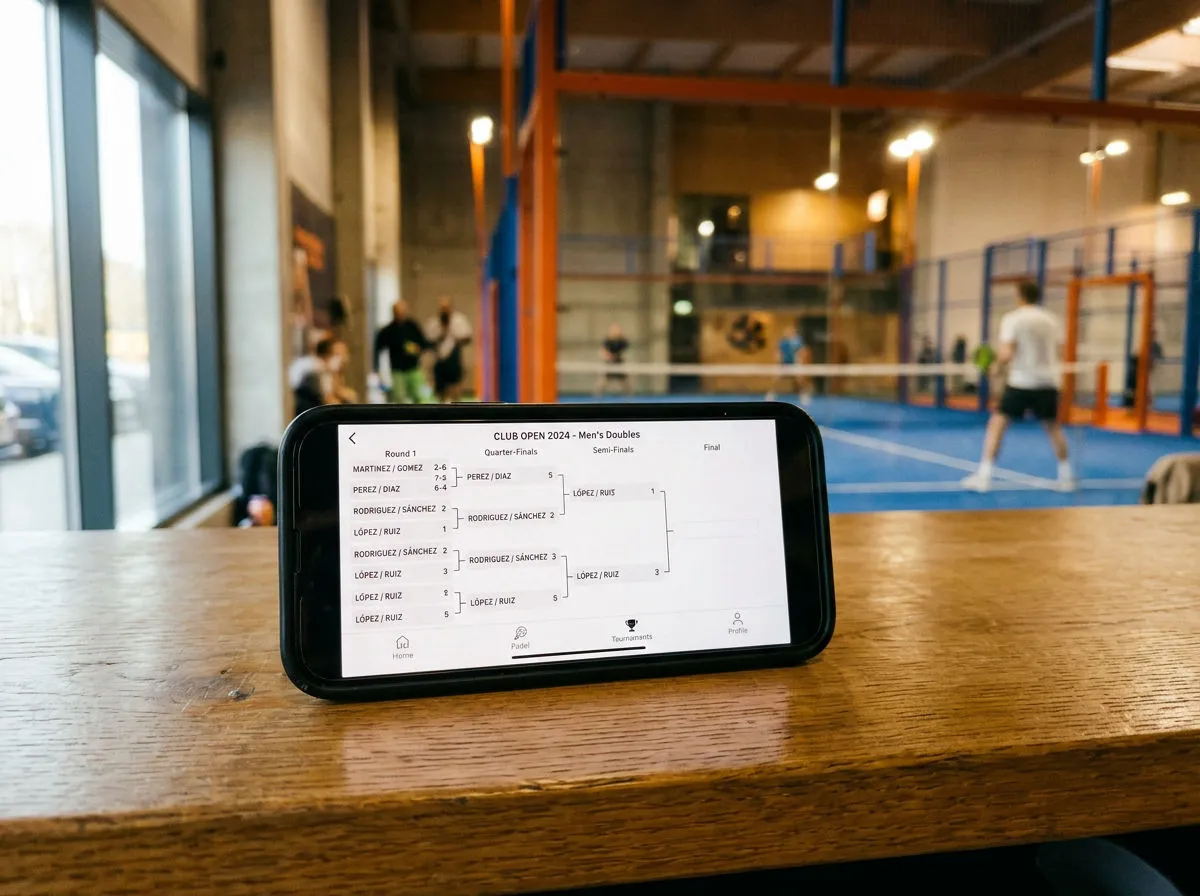
A fully featured independent platform manages the entire operational lifecycle of a player's visit:
- Court Reservations: Real-time court grids allowing split payments, dynamic pricing for peak hours, and member-priority booking windows that protect regular players from being boxed out by transient traffic.
- Integrated Payments: Direct settlement into your own merchant account, cutting out intermediary platform delays and eliminating predatory per-player transaction surcharges.
- Skill Ratings and Levels: Internal player level tracking that groups players accurately for competitive balance without relying on external, multi-club leaderboard systems.
- Open Matchmaking: Enabling players to organise open games to find a fourth player within your club's closed community, keeping court occupancy high during off-peak windows.
- Tournaments and Socials: End-to-end management for Americano tournaments, Mexicano formats, knockouts, and weekend social mixers, keeping player registration and results within your venue.
When these tools run inside your own white-label environment, every social interaction strengthens your venue's community. If an open match needs an extra player on court two, an alert goes out exclusively to players registered at your club. Your players interact with each other, arrange weekly games, and follow club notices without seeing a banner ad for a competing venue across town.
Buyer's Guide & Final Verdict
Operating with local rivals within driving distance makes shared marketplaces an unnecessary risk. Every booking on a public directory charges a commission fee while exposing your player list to nearby venues, making independent booking tools essential for protecting operational margins.
Transitioning your venue starts with auditing your previous month of reservations to separate organic repeat visitors from aggregator-driven walk-ins. Move new beginner clinics and internal leagues onto a custom white-label system first, building a clean customer database you can message directly. Keep recurring slots private. Keeping recurring court slots off public directories protects your pricing strategy and stops local competitors from dragging your venue into a feed-level price war.
Running an independent booking system built specifically for your own club, whether using Six Love or something else entirely, is the only way to put a wall around your customer base, retain your players, keep your margins intact, and own your customer data.
FAQ
What happens to our existing player list if we move off a shared marketplace?
You can export existing booking histories and member profiles from your current management dashboard into a spreadsheet, then import that data directly into a dedicated white-label platform so returning players keep their active accounts.
Will our booking volume drop if we are not listed on a public aggregator app?
Venues with active local competition typically retain their core playing base because regular players care about court quality, community, and coaching staff rather than the specific app they use to reserve the court.