Pros and Cons of Building a Custom Padel Booking System
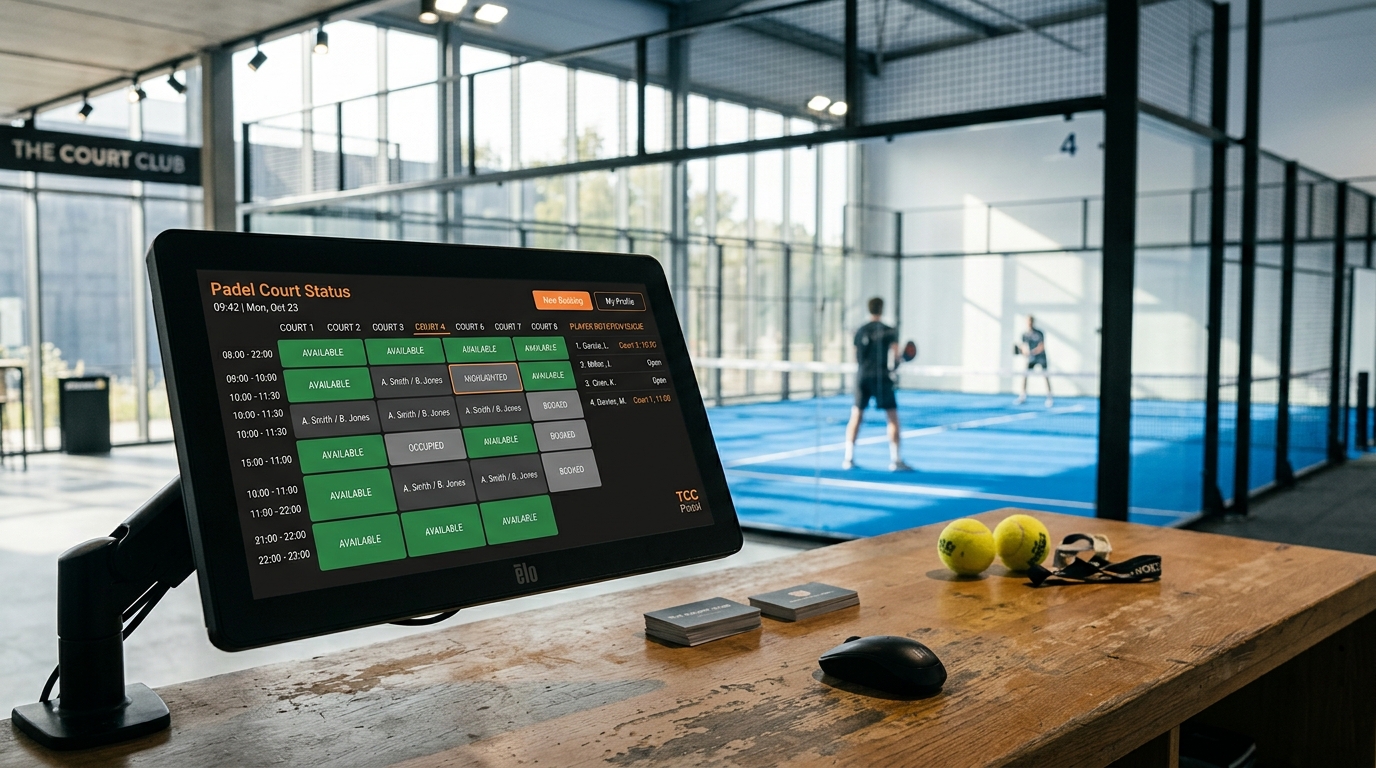
Building a custom padel booking system gives an operator total command over their court grid, but starting from scratch is usually a trap. Unless a club is processing well over 20 bookings a day and drowning in administrative chaos, the development overhead will crush the upside. Generalist software agencies rarely understand racket court rotations, which leads directly to blown budgets, delayed rollouts, and persistent bugs that anger players. A well-executed transition should target an 80% reduction in daily admin time while protecting customer records from marketplace aggregators.
To address my own background plainly: I am a developer and partner in Six Love. Having grown up playing club tennis from age 12 and spent years watching padel expand across Spain, I have seen venues struggle on both ends of the spectrum, from chaotic paper logbooks to multi-million-euro custom builds that stalled at checkout.
The Real Cost of Manual Scheduling
Managing even three active courts during the 17:00 to 22:00 prime-time rush by hand burns staff hours and degrades player experience. It is not just about the hours lost answering phone calls or replying to WhatsApp messages. Padel is a four-player sport, meaning players need accurate, real-time schedule information to coordinate matches with three friends. When someone has to message your desk, wait for a desk clerk to check a physical sheet, and message their group back, the game slips away. By the time the club confirms an 18:30 slot, one player has taken a work call and the booking evaporates.
That manual back-and-forth invites human error. Double-bookings happen, court assignments get mixed up, and coaches turn up only to find another pair occupying their training court.
"When I started playing padel in Spain, I noticed that players rarely felt tied to any particular facility."
— Darren Burns - Six Love Founder
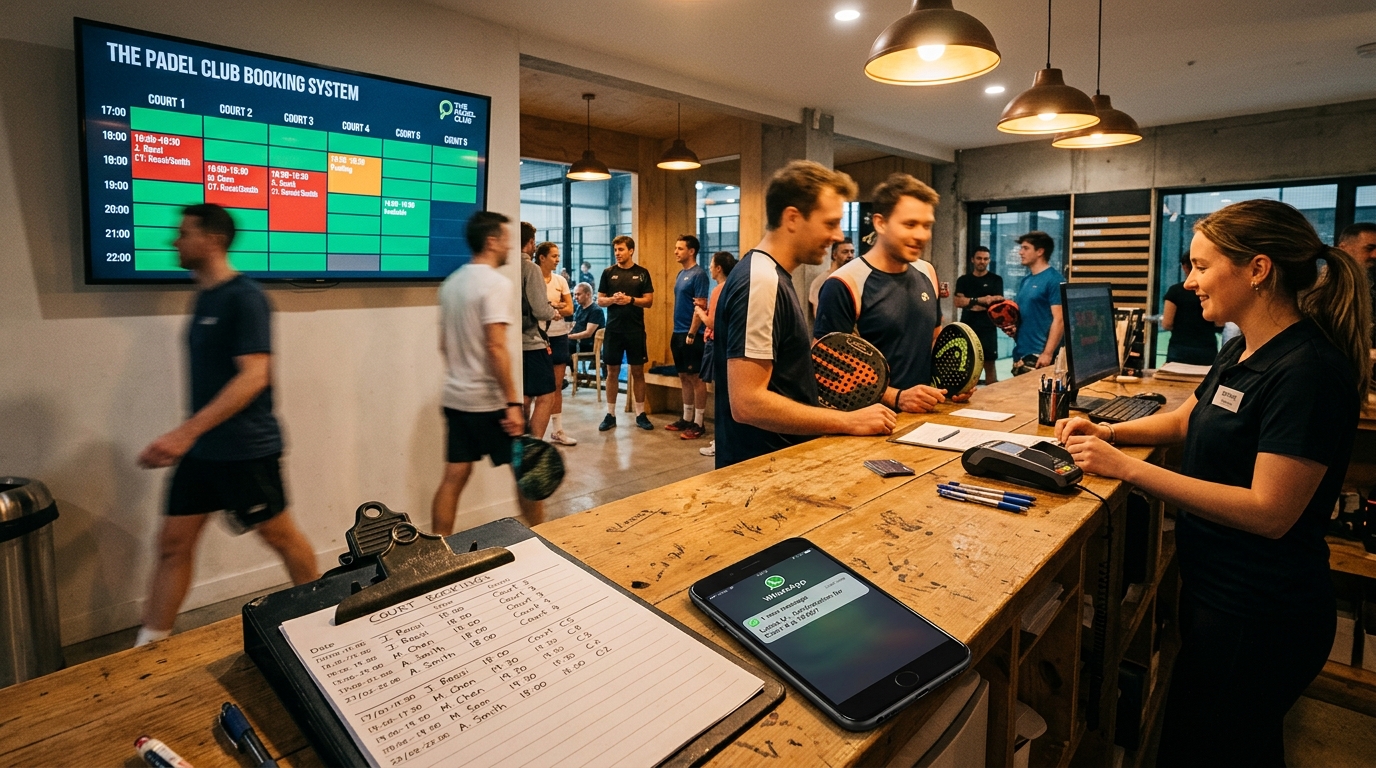
Adopting a market place app such as Playtomic, helps with manual coordination but also ruins the social atmosphere of a venue. When I started playing padel in Spain, I noticed that players rarely felt tied to any particular facility. The venues functioned merely as court vendors where you paid your fee, played an hour, and walked out. A properly designed booking platform creates community by placing matchmaking sessions, Americanas, clinics, and weekend tournaments directly in front of members whenever they reserve a court rather than advertising competing venues and events to the players. When that in club discovery layer is missing, players treat your venue as an interchangeable box.
Metrics of Booking Management
Stepping away from manual messaging threads or disconnected spreadsheets completely reshapes weekly operations. Moving to a dedicated digital platform converts administrative firefighting into predictable hospitality work.
MetricBefore AutomationAfter Dedicated PlatformWeekly Admin Time15–20 hours spent on calls, messages, and manual calendar editsUnder 3 hours managing exceptions and automated slot allocationsBooking Drop-OffHigh friction; players abandon reservations during off-hoursInstant 24/7 self-service booking with live slot reservationsMember Data ControlFragmented across WhatsApp threads, paper pads, or third-party appsCentralized first-party database owned entirely by the clubEvent Fill Rates40–60% capacity due to manual promotion and noticeboards85–100% capacity via instant event notifications and in-app signups
When court turnarounds, slot locks, and card payments process automatically, your front desk staff stop acting like air-traffic controllers. They can greet players, manage the pro shop, and keep matches running on time.
High Stakes of Building a Custom Padel Booking System
Building custom software gives multi-sport resorts complete control over complex hardware integrations like automated court lighting relays, turnstiles, and point-of-sale registers, meaning you own your roadmap, eliminate recurring seat fees, and dodge the feature bloat of off-the-shelf platforms. You own your roadmap. However, that autonomy requires funding dedicated engineering cycles that small-to-midsize venues simply cannot sustain alongside court construction debt.
If a facility operates twenty courts across padel, tennis, and pickleball with a restaurant and private gym, off-the-shelf software often forces awkward compromises. A custom build becomes justified when an operator requires complete creative freedom over business logic: proprietary membership tiers, automated court lighting triggered by booking check-ins, physical turnstiles reading member QR codes, and custom accounting exports.
For venues with hundreds of thousands of dollars in capital and the player base to test software under heavy volume before launch, bespoke development secures permanent data ownership and avoids recurring SaaS fees. According to research on sports facility management software by RaftLabs, custom builds typically run between $80,000 and $160,000 for an initial 10 to 16-week scope. But when requirements expand, delivery schedules stretch; Peppernode's sports venue case study showed that building a custom venue booking platform from scratch exceeded 12 months.
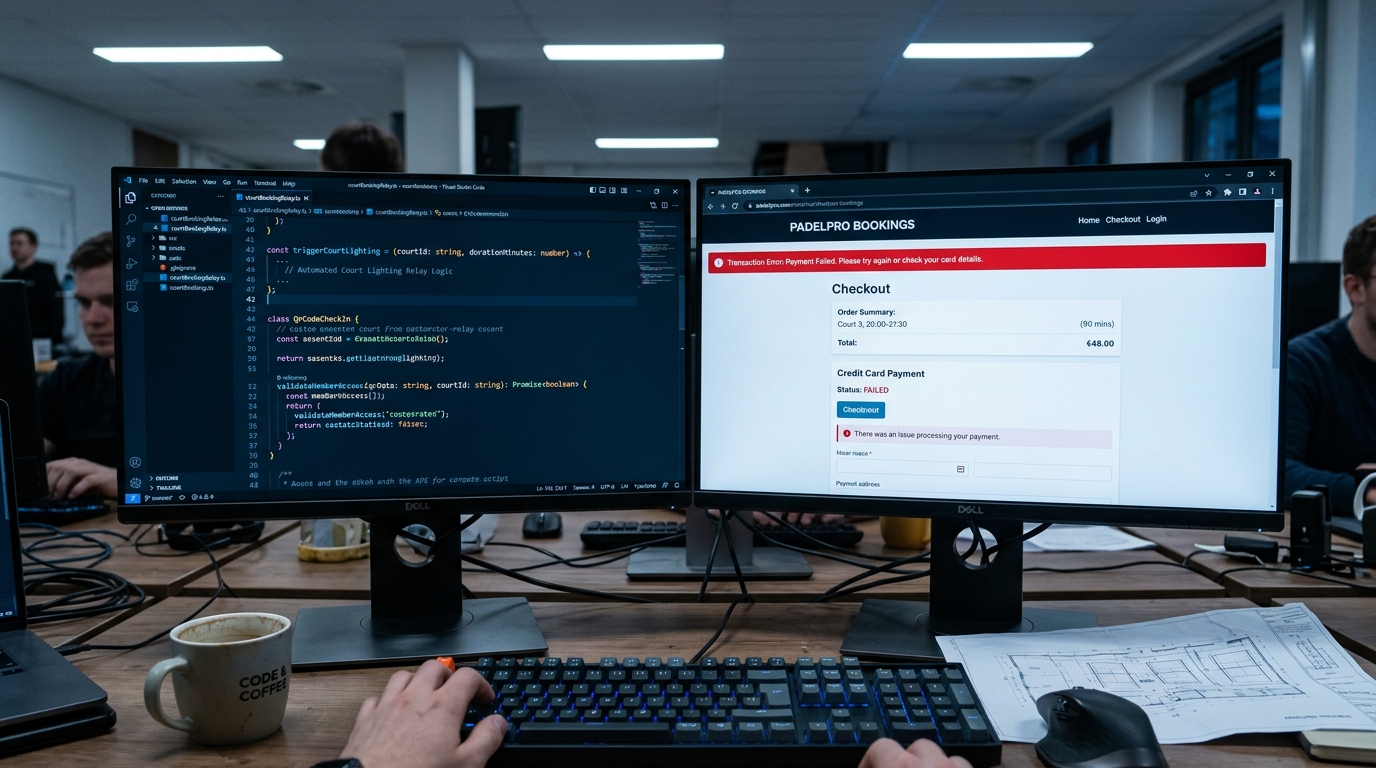
A local venue, which I will not name despite its reputation as a world-leading padel club, spent eight months building its own custom platform. What they launched was functional but severely limited, allowing players to do little more than check availability and reserve courts. Even that basic utility failed at launch due to persistent issues syncing bookings with international card payments. The club had to pull the platform offline for two full months to rebuild the integration, leaving a sour taste with every member who tried to book.
Agencies understand generic ecommerce and standard appointment calendars, but non-player developers consistently miss the practical rules of racket sports:
Slot locking rules: Stopping players from reserving 60-minute windows that leave unusable 30-minute orphaned gaps during prime evening hours.
Turnaround buffers: Enforcing five to ten-minute buffers so one foursome can pack their bags before the next group walks onto the court.
Dynamic pricing tiers: Applying separate rates for peak members, off-peak guests, student passes, and discounted coaching blocks without manual staff overrides.
Split payments: Splitting a court reservation fee four ways at checkout without leaving unpaid balances hanging over the front desk.
Simulating realistic user behavior internally is nearly impossible. When a club builds its own tool from scratch, the first real load test happens on launch day. When sixty members jump online at 08:00 on Monday morning to grab Friday night courts and the server crashes, member trust evaporates instantly.
Hidden Costs of Marketplace Aggregators
Burned by the cost and delays of custom software builds, operators often run straight to public aggregator apps like Playtomic or Padelmates. These apps solve the immediate technical headache. The code is tested, card payments clear, and local players may already have the app installed.
The real price is customer leakage. Aggregators are engineered to expand their own network, not your club. When regular players use an aggregator app to book your venue, they are shown every rival facility nearby. If your prime evening slots fill up, the interface presents available courts at the club across town.
Gradually, your facility turns into an anonymous court supplier. You surrender booking commissions while the platform holds the member profiles, communication channels, and purchasing history. If you leave the aggregator later, your player base remains inside their ecosystem. Retaining direct player relationships and owning your data is essential for long-term survival in tennis, pickleball, and padel.
The Hybrid Enterprise Approach
A branded hybrid setup provides a practical path between a volatile custom build and an aggregator that leeches your customers. It runs on a battle-tested core engine for scheduling and payments, while presenting your club's own branding, logos, and custom operational rules.
When we engineered the Six Love framework, we chose React with Vite tooling on the front end, backed by Supabase and PostgreSQL. This setup delivers high performance and strict relational data integrity without traditional backend bloat. Clubs retain open web standards and portable SQL rather than locking themselves inside a closed, proprietary ageing system.
Testing booking logic requires extensive real-world usage. After running fifty internal testers through our system, we spent six months testing at an active demo club with hundreds of users, multiple administrators, and several coaches. That trial exposed edge cases and schedule conflicts that no development team would catch in an office.
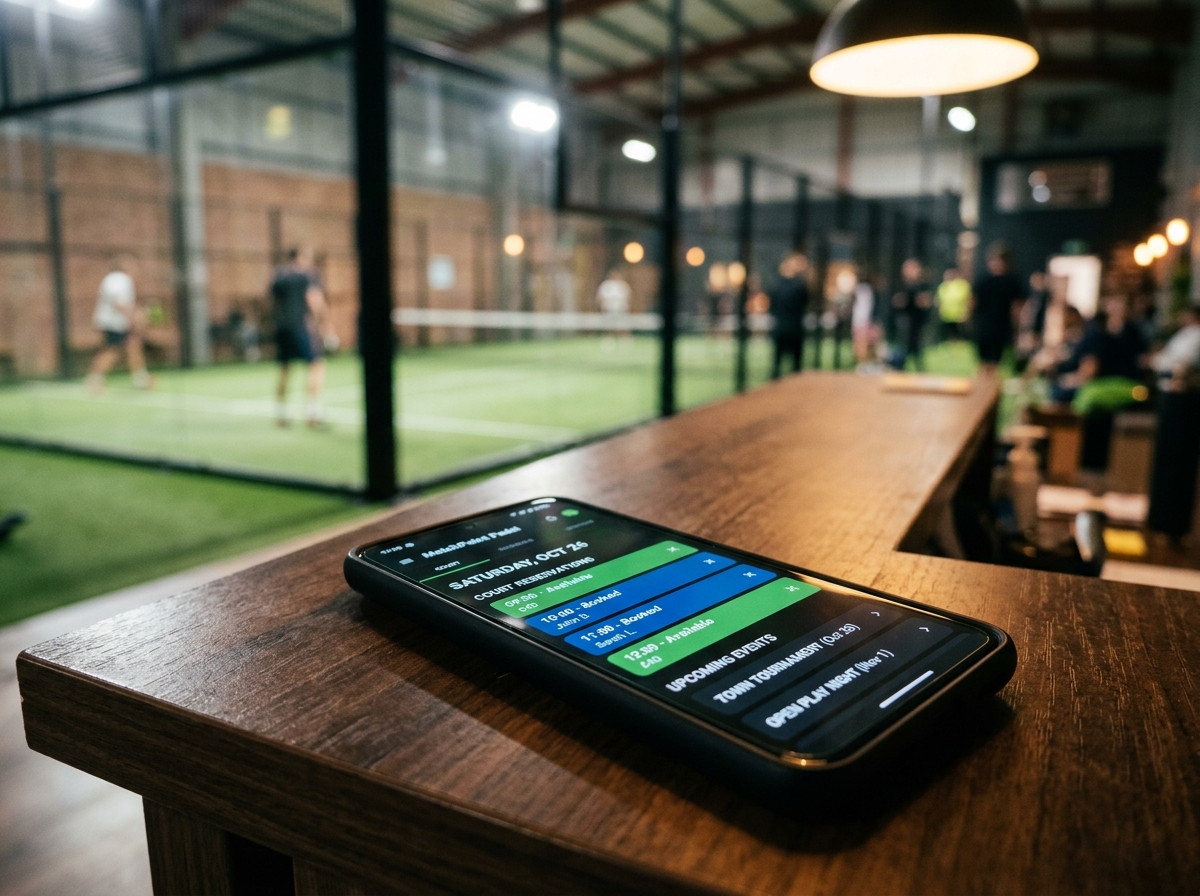
Deploying this framework across a club takes six weeks through a clear sequence:
Discovery and process mapping: During week one, an onboarding manager audits your current booking methods, pricing tiers, and court policies, collecting brand assets and color schemes to build your draft app.
Internal configuration and review: In week two, your administrative team checks booking flows, opening hours, lighting controls, and staff permissions inside the test environment.
Payment setup and data migration: We connect payment processors and import all existing member records, pass balances, and active subscriptions.
App store submission and parallel shadowing: The custom apps go to the Apple App Store and Google Play Store, which takes two to four weeks for approval. During that waiting period, staff run the new web portal alongside your existing setup, learning the software safely without risking member friction.
Public rollout: As soon as store approvals clear, your branded system goes live for player bookings.
Where I'd Start
Choosing the right software setup depends on your capital reserves, your appetite for technical maintenance, and whether you want to own your customer relationships. Embarking on a ground-up custom padel booking system makes sense only for multi-venue operators with substantial capital, an in-house engineering team, and the patience to troubleshoot payment API shifts and database bugs over several years. For independent clubs, building custom software from scratch is an unnecessary financial sinkhole.
Handing your customer base to marketplace aggregators trades short-term bookings for permanent player leakage, while ground-up custom engineering drains capital that should go toward facility maintenance. For venues running at full tilt, adopting a battle-tested hybrid engine delivers branded member independence without the multi-month sync bugs. Audit your prime-time slot drop-offs this week. Install a dedicated booking layer that keeps your player records under your own roof.
We built Six Love to offer the robust and feature rich platform or an off the shelf rackets club booking system, but made it modular and customisable so that clubs can own a booking system that works with everything they offer. Player data is never shared with competing clubs, ensuring your members stay yours. And of course, it comes without the six figure price tag too.