
Running court bookings, memberships, and coaching schedules across disconnected spreadsheets and WhatsApp groups breaks down the moment 40 players fight over three courts on a busy morning. Finding reliable Sportyfriends alternatives requires looking past general fitness portals. The most reliable path is choosing software built specifically for racquet sports rather than a general system that handles everything from yoga studios to soccer pitches. A multi-sport platform will never be good at your specific discipline. Finding the right Sportyfriends alternative means deciding between open player marketplaces and dedicated club management systems. I design software for racquet facilities at Six Love, so I spend every week looking at where these setups succeed and where they fall over. That matters because your venue might need unstaffed gate automation, seasonal billing flexibility, or a private booking portal that keeps members from being routed to competing courts. Pick wrong and your front desk gets buried in manual work.
Facility operators waste hours untangling the daily operational messes caused by generic software. Racquet clubs have distinct operational mechanics, including split payments, coach availability, skill-tiered clinics, ladder competitions, and court light automation.
Choosing the right platform comes down to four practical criteria: sport-specific feature depth, the fee structure behind member payments, integration with physical court hardware, and onboarding overhead during data migration. Here is how the top contenders stack up.
Why Standard Booking Tools Fail Racquet Clubs
Generic booking tools treat a tennis or padel court like an empty conference room or a barber's chair. You reserve a sixty-minute block, assign a fee, and send a calendar invite. That model collapses fast in a racquet club setting.
Tennis, padel, and pickleball operations break standard calendar software because a reservation is rarely just an isolated time slot. A one-size-fits-all management system fails for racquet facilities because it lacks the premium features that clubs rely on daily to keep members on court. Players do not just book empty slabs of concrete; they look for partners at their skill level, register for structured ladders, split booking fees among four players, and book private coaching sessions around court availability.
When a management platform ignores those mechanics, staff end up managing workarounds manually. Coaches track private lesson slots on personal phone calendars, front-desk staff field phone calls to split court fees, and social drop-in sessions turn into disorganized chaos.
Pricing models in generic systems introduce another operational headache. Sportyfriends uses a pay-as-you-go model that takes a percentage of your revenue, starting at 1% and scaling up to 3% based on volume. If you need a white-label version with your own branding, you have to book a consultation call because they quote those implementations on a case-by-case basis.
That take rate eats directly into operating margins as court use climbs. Racquet clubs running paid booking systems normally face transactional fees between 2% and 8%. Pay-as-you-go setups or membership-driven operations with white-label solutions often see monthly software costs running from $300 well into the thousands depending on the required functions and custom programming. Paying a perpetual commission on your own court inventory makes little sense when the platform is not supplying new players.
Comparing the Top Sportyfriends Alternatives
The table below breaks down the primary options available to racquet facilities in 2026, comparing base pricing, core target disciplines, standout operational capabilities, and trade-offs.
| Product | Price | Best use case | Standout feature | Trade-off |
|---|---|---|---|---|
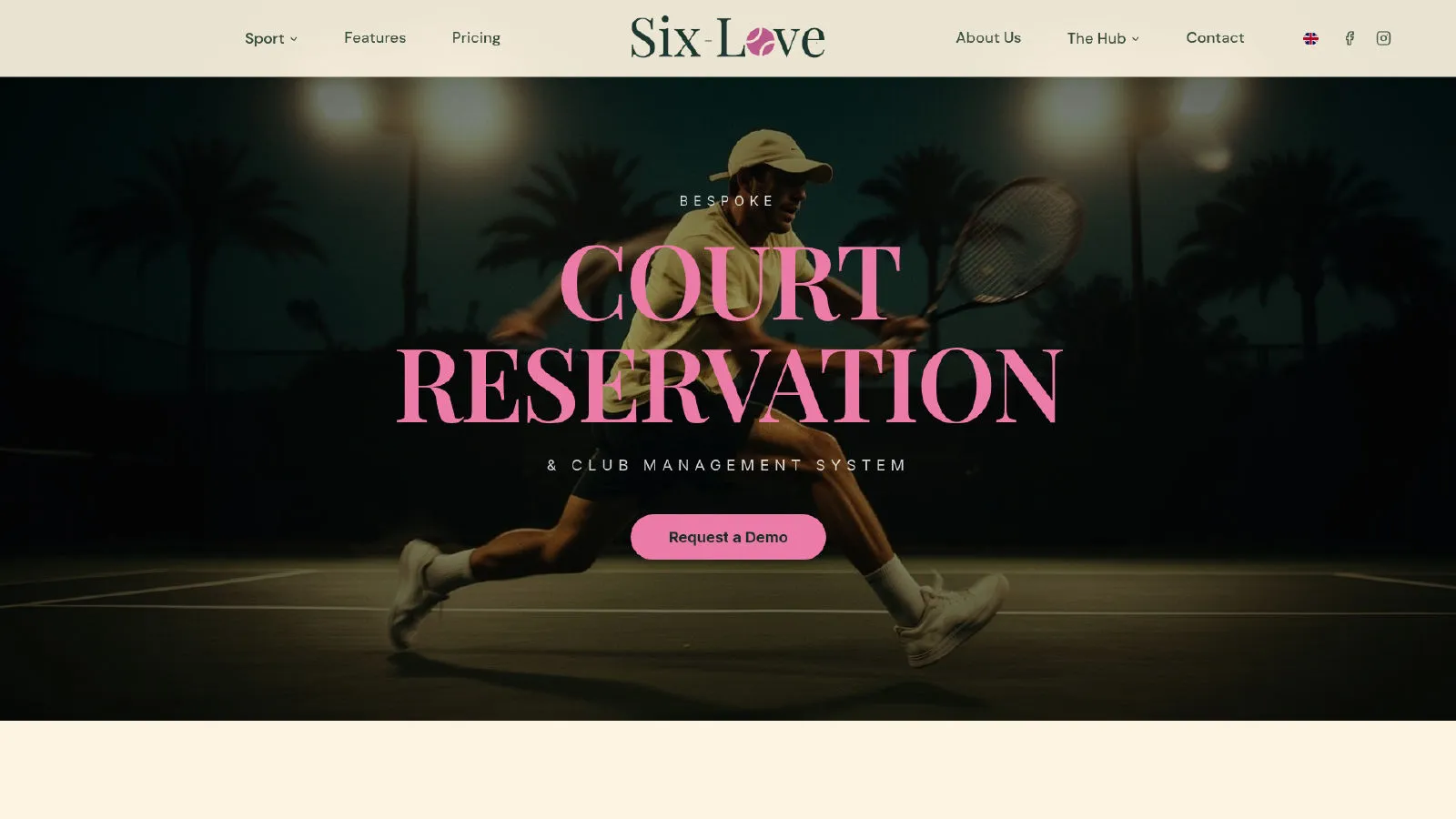
| Six Love | €99/month - €199/month (Custom plans available) | Tennis, Padel, Pickleball | Fully bespoke white-label customization and integrated matchmaking | Pricing can run high for smaller clubs without technical support needs |
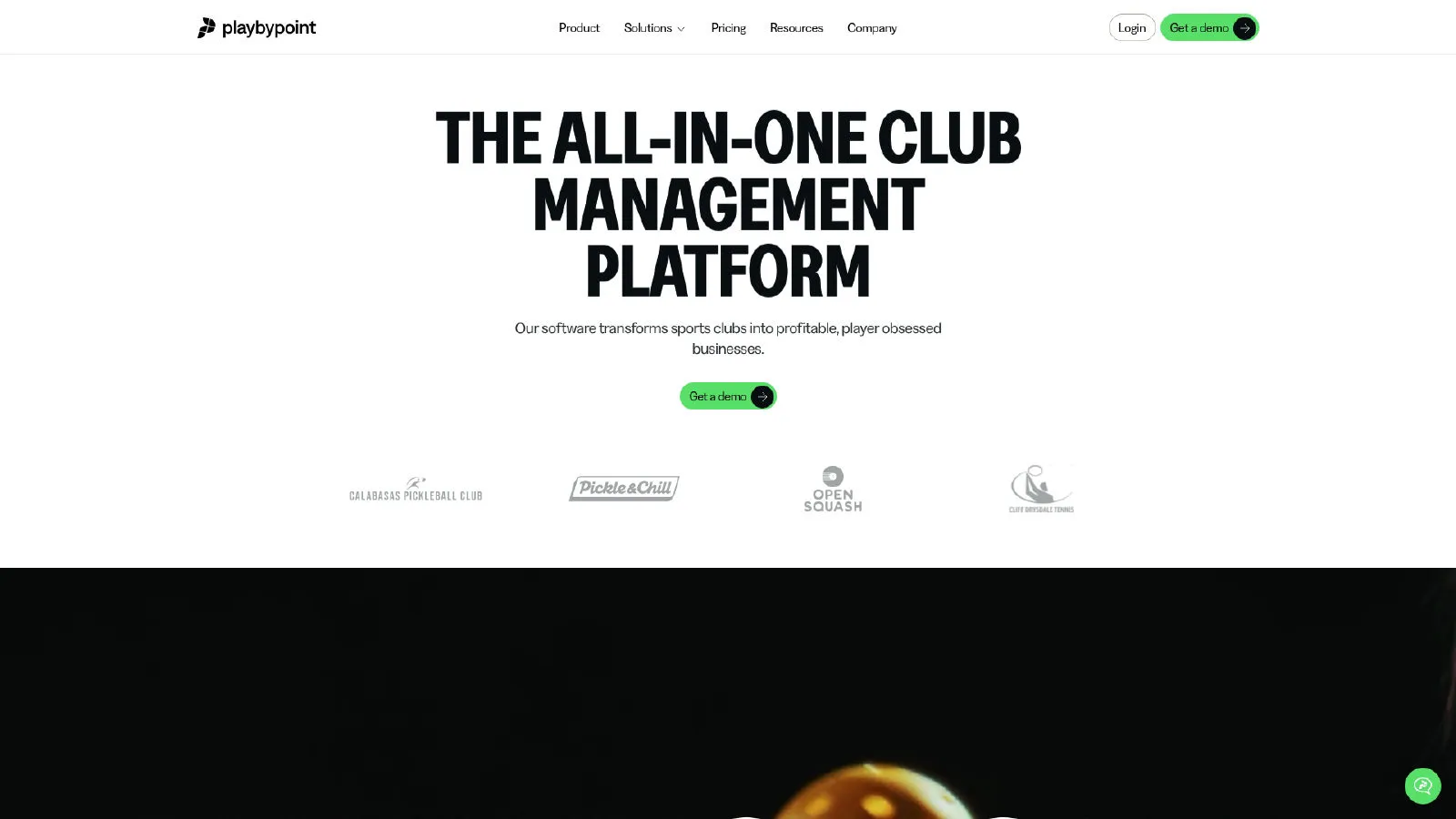
| PlayByPoint | ~$250/month (Custom quote) | Tennis, Padel, Pickleball, Squash | Kisi door access control integration for 24/7 unstaffed operation | Interface organization can be complex and pricing requires custom quotes |
| RacquetDesk | ~$150/month | Tennis, Pickleball, Padel, Racquetball, Table Tennis, Squash | Specialist focus on six racquet sports with seasonal plan options | Payroll support limited to higher-tier Pro plans |
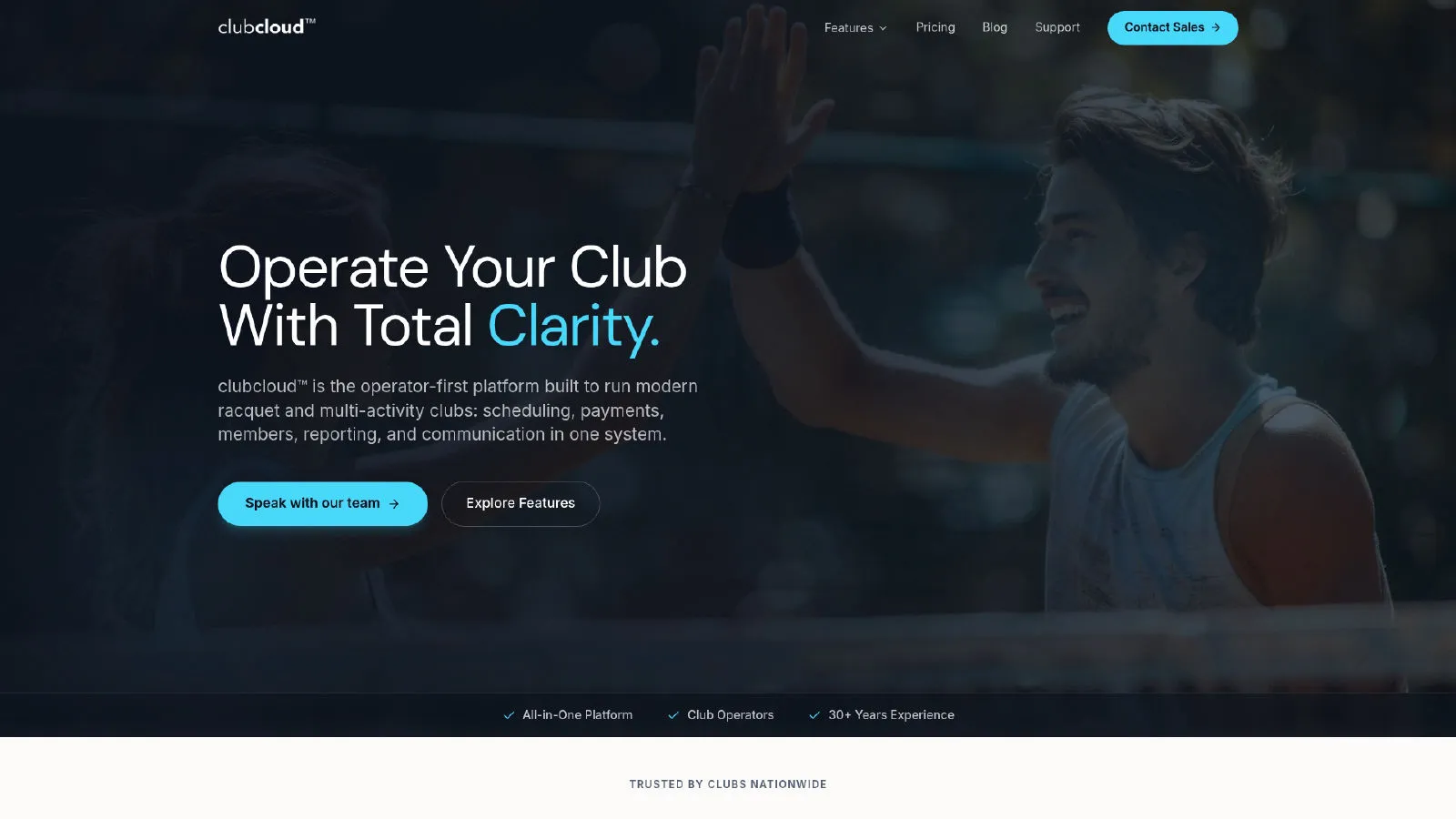
| clubcloud | ~$120/month | Multi-sport club facilities | Modular booking and member administration tools | Less specialized focus on advanced racquet mechanics like DUPR ratings |
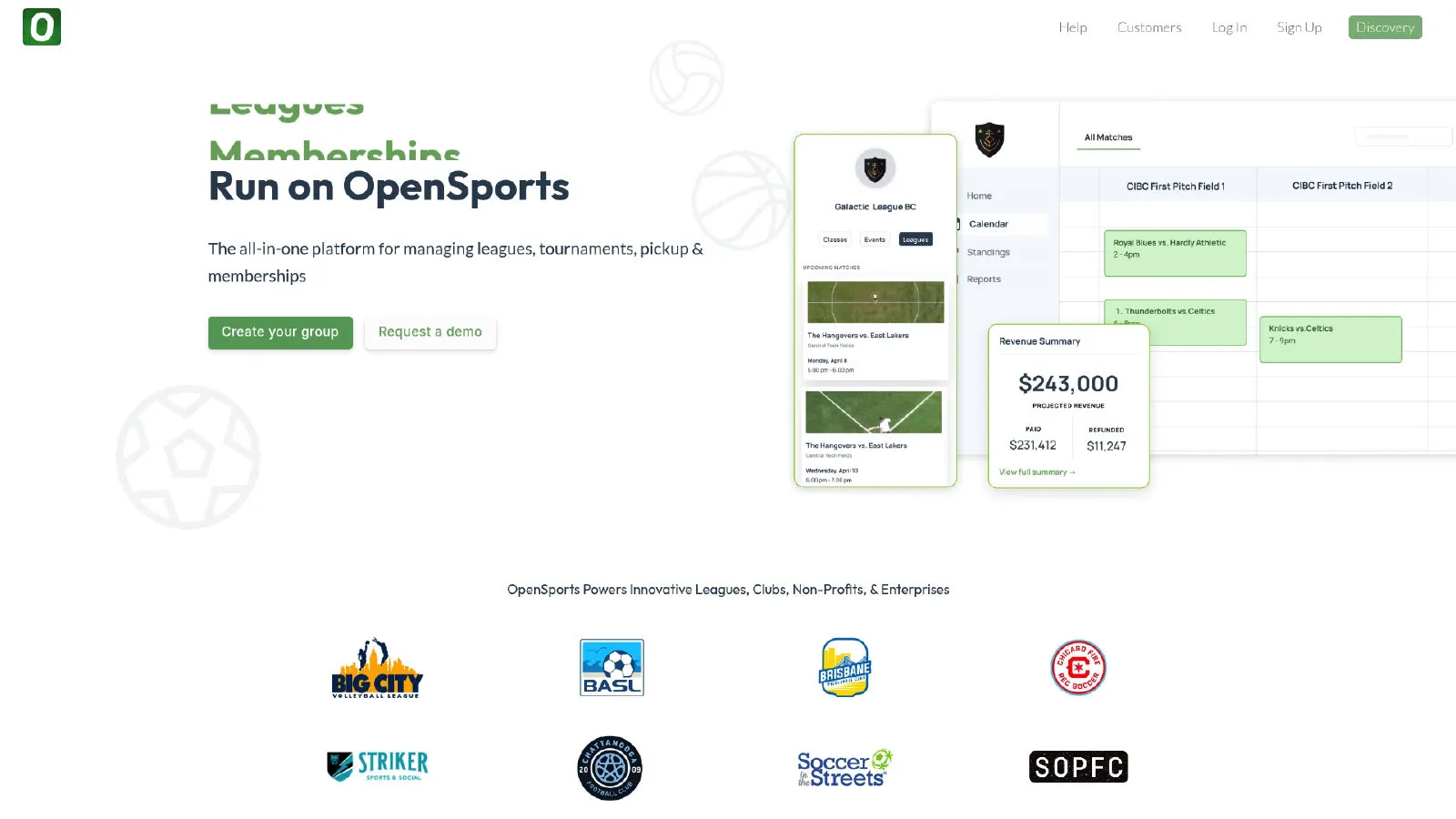
| OpenSports | ~$99/month | Pickleball and recreational sports | Strong community drop-in and event management tools | Lacks comprehensive court lighting and physical access integrations |
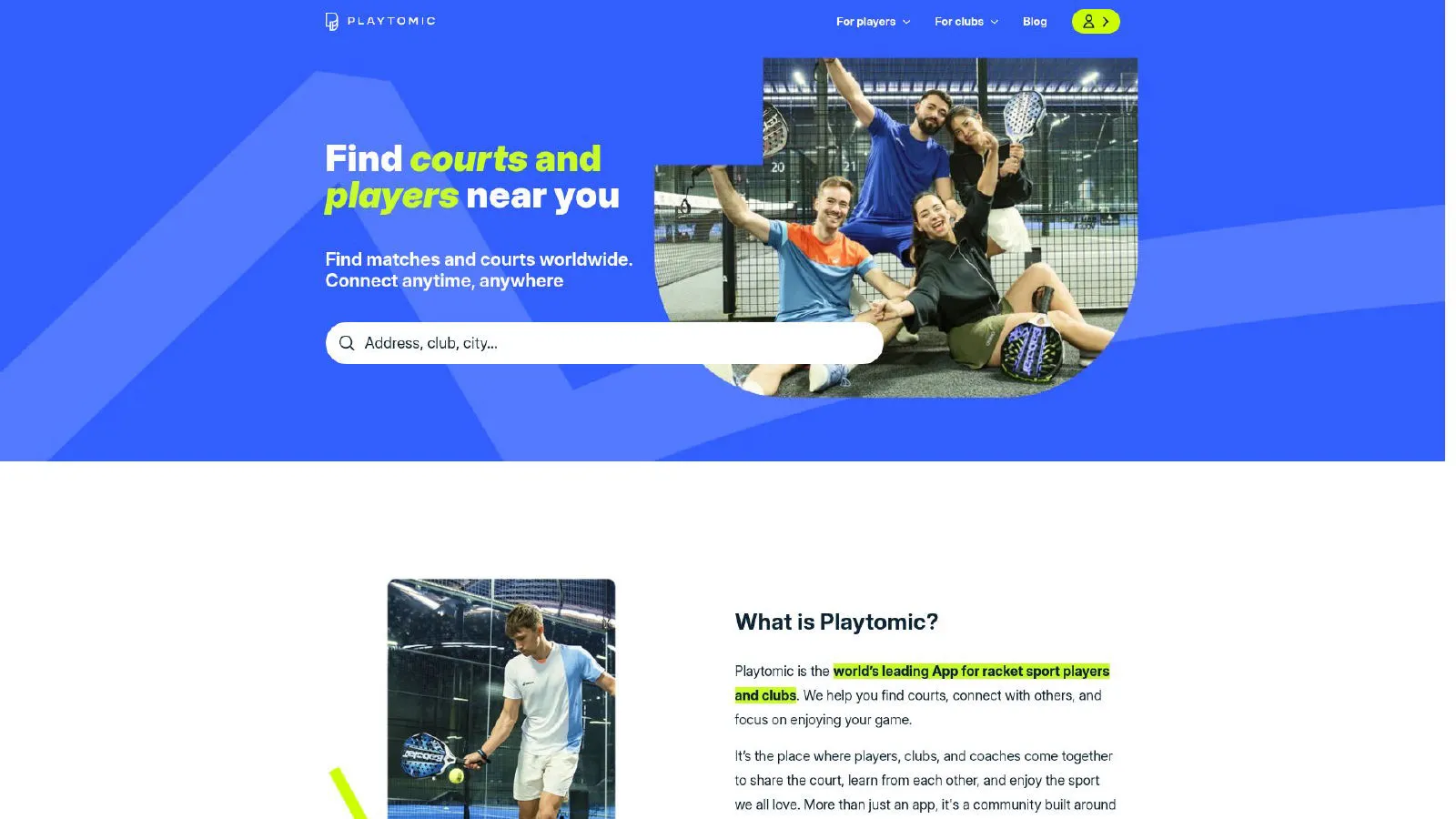
| Playtomic | Commission-based (~2% to 5%) | Padel and Tennis | Massive built-in player discovery marketplace | Cross-promotes competing local clubs directly to your member base |
Evaluating Feature Depth and Sport-Specific Specialisation
Booking systems that try to manage all sport types will always miss features for specific disciplines, such as the player matchmaking, leagues, and ladders that people love on OpenSports, which a one-size-fits-all platform simply cannot offer. Even some off-the-shelf niche systems can be flawed because every club operates differently. That feature gap directly impacts how often members interact with your club.
When players struggle to find four balanced participants for a game, courts sit empty. Playtomic approaches this through a shared marketplace, allowing independent players to find open matches across facilities. The catch is structural: Playtomic advertises nearby competing clubs directly to your members inside the app. For established facilities with an existing member base, sending players into a shared marketplace where rivals can siphon them off is a serious drawback.
PlayByPoint attacks operational efficiency from an infrastructure angle. By integrating directly with Kisi access control systems, a confirmed booking automatically unlocks court gates and activates lighting. For operators moving toward unstaffed, 24/7 operations, this eliminates early-morning gate code complaints and cuts front-desk staffing costs. However, the administrative backend is dense, and navigating member accounts requires significant onboarding time.
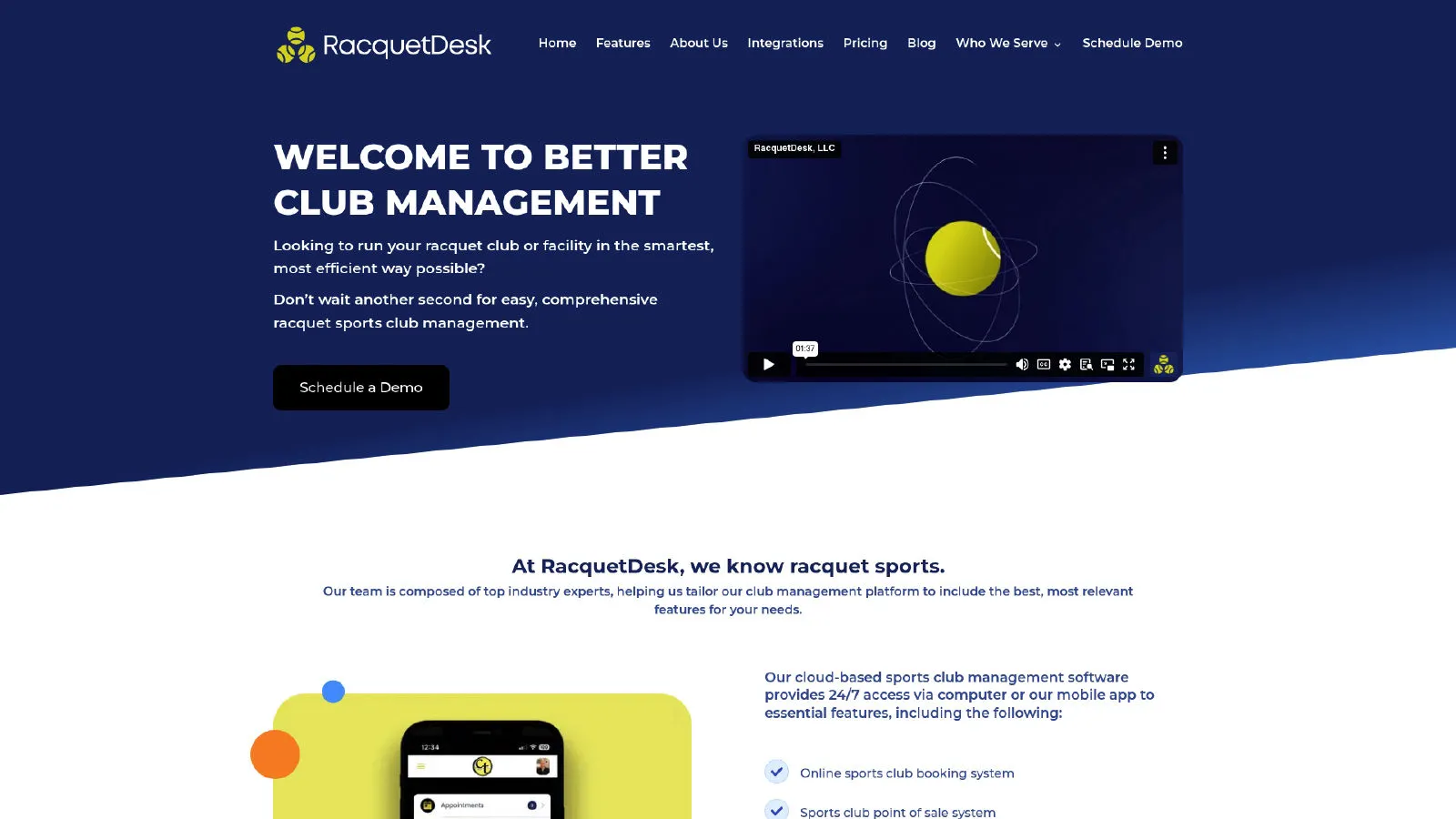
Specialist platforms like RacquetDesk focus tightly on racquet disciplines, covering tennis, pickleball, padel, racquetball, table tennis, and squash. They offer seasonal subscription models, which prevents summer-only facilities from paying full software retainers through the winter. The drawback is functional segmentation; advanced operational tools such as staff payroll support remain locked behind higher-tier Pro subscriptions.
For community-focused recreational venues, OpenSports excels at managing casual drop-ins, king-of-the-court formats, and round-robin events at ~$99/month. Yet it lacks the physical access control, court light relay triggers, and granular court-sheet reservations that high-volume racquet facilities require. Similarly, clubcloud provides dependable modular member administration for multi-sport complexes, but skips advanced racquet-sport rating integrations such as DUPR.
When I set up the booking system for Estepona Pickleball Club, the facility was relying entirely on Playtomic. It presented two fundamental problems: pickleball players were not active on Playtomic, making bookings rare, and the platform actively advertised regional competitor facilities to their players.
After implementing a customized Six-Love system tailored to their specific membership rules, attendance shifts were immediate. Within three weeks, coaching sessions and social group clinics were consistently sold out, forcing the club to expand from two weekly groups to six to manage demand. Individual court bookings took slightly longer, but within six weeks, total reservations had tripled.
A similar shift occurred at our first racquet club client in Ireland. Replacing four separate WhatsApp booking threads cut weekly desk coordination from roughly fifteen hours down to three. Instead of relying on manual WhatsApp threads, members coordinated their own open matches and reservations, freeing administrative staff to focus on member retention and club amenities.
Migration Timelines and Real-World Implementation Realities
Switching management software feels daunting when an operational facility carries hundreds of active memberships and forward court bookings. When a club recently migrated off Sportyfriends to Six Love, I handled the database transfer directly, mapping active memberships and forward court bookings over a weekend. That prevented double bookings during peak morning hours and allowed members to log in with their existing credentials on Monday.
Choosing the Right Management System for Your Facility
Facility size, operational staffing levels, and member retention models determine which software makes commercial sense for your courts.
Playtomic suits brand-new clubs in high-density urban areas that need immediate foot traffic. If you have unbooked courts and no existing member list, their marketplace delivers players, provided you accept their 2% to 5% commission rate and competitor cross-promotion.
PlayByPoint is the clear winner for unattended commercial facilities. If your business model relies on unstaffed evening play where players must unlock gates via Kisi integrations, their platform justifies the higher price point and custom quoting process.
RacquetDesk fits seasonal multi-sport racquet clubs that close down during the winter months. Their flexible billing tiers prevent unnecessary overhead during off-peak seasons, provided you do not require automated payroll on basic tiers.
OpenSports and clubcloud fit budget-conscious public parks and multi-sport municipal centers. If you run casual round-robins and do not need physical access automation, their lower price points protect your cash flow.
Six-Love is built for established tennis, padel, and pickleball clubs that want to protect their member base under their own brand. If your priority is eliminating manual booking administration, automating member ladders, and driving repeat court use without handing your data to a public marketplace, a bespoke dedicated system pays for itself within the first few months of operation.
Selecting a management platform comes down to whether you are willing to trade your member data for marketplace traffic. If you run an unmanned facility, automated door access through PlayByPoint justifies the system complexity. If you operate seasonally, RacquetDesk keeps winter overhead low. But if you manage an established club and want to keep your members under your own brand without paying a percentage fee on every booking, you need a dedicated racquet system.
Which System Fits Your Courts Today?
Selecting a management platform comes down to whether you are willing to trade your member data for marketplace traffic. If you run an unmanned facility, automated door access through PlayByPoint justifies the system complexity. If you operate seasonally, RacquetDesk keeps winter overhead low. But if you manage an established club and want to keep your members under your own brand without paying a percentage fee on every booking, you need a dedicated racquet system.
FAQ
What transaction fees should a racquet club expect on court bookings?
Marketplace platforms charging a 4% take rate cost a facility €600 every month on €15,000 of court turnover, compared to predictable flat-rate SaaS plans. Running direct merchant processing through Stripe instead keeps standard card fees between 1.4% and 2.9% without siphoning revenue as bookings climb.
Can court management systems control physical gate access and lighting?
Certain platforms integrate directly with smart hardware controllers like Kisi. When linked, a confirmed court reservation automatically issues a mobile access key and triggers court lighting for the booked duration.