Tennis Club Versus Padel Club Business Economics
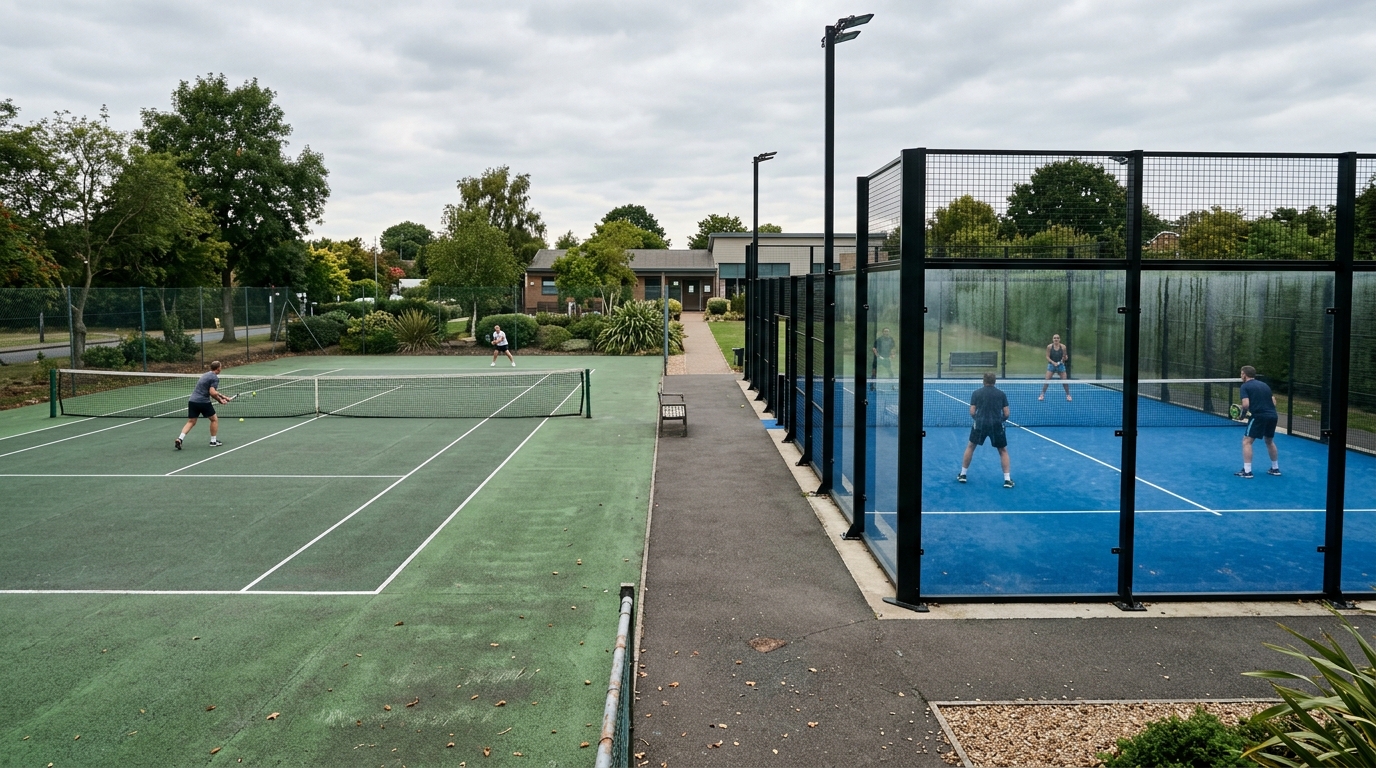
When facility investors weigh the economics of a racquet sports venture today, the choice rarely considers a tennis club. With a well documented racket industry boom, most consider a padel club with some also looking at the growth of pickleball. It may be time to rethink the box, although admittedly, this will be a contrarian view. But I will make some very valid points that investors should consider.
I started playing racquet sports around the age of 12 on outdoor tennis hard courts, and I still play three times a week across tennis, padel, and pickleball. When analysing the base economics, an eight-court padel warehouse looks like an unbeatable cash engine on paper. But I would choose a four-court tennis facility every day of the week. The high turnover per square foot that attracts private equity into padel comes attached to severe player churn, platform-driven price wars, and ongoing maintenance obligations that eat into operating margins.
As both an active multi-racquet player and a developer building court booking software, I evaluate facility economics through an operational lens focused on player retention, maintenance drag, and platform dependency. A modest four-court tennis club built on durable hard courts provides an established, compounding membership base that insulates operators from the volatility currently shaking the padel sector in some countries, and on its way post boom in others.
Why Tennis and Padel Facilities Offer Different Economic Realities
The arithmetic driving the current rush into padel is simple: you can fit three padel courts into the footprint of a single tennis court. If you take the standard run-off space and playing surface required for one regulation tennis court, three 10-meter by 20-meter glass enclosures slip comfortably into that exact footprint.
Because padel is played almost exclusively as doubles, packing three courts into a single tennis footprint puts twelve active, paying players into the space that might otherwise host two singles tennis players on a weekday morning. That turns over three times the revenue per square foot on paper. This arithmetic hooks investors.
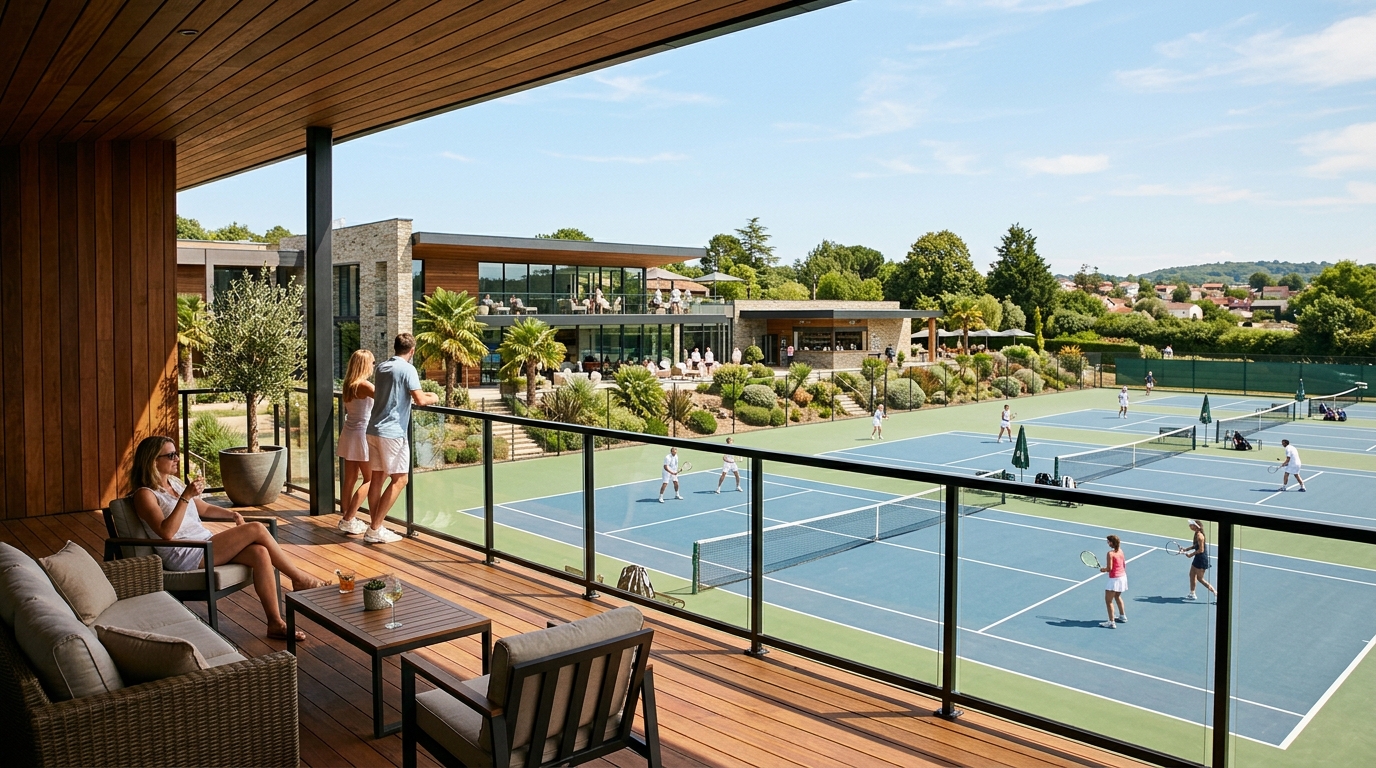
Yet top-line turnover does not equal net margin. The density that makes padel attractive inside an expensive metro warehouse also concentrates impact shock and mechanical wear across tempered glass panels and sand-dressed turf. Tennis facilities give up that peak hourly floor density for lower capital risk, predictable member retention, and structural stability. On base raw square-foot revenue potential, an eight court padel warehouse still comes out ahead.
Comparing the Operating Metrics of Tennis and Padel Clubs
Upfront build costs can mislead investors. These very approximate figures reflect commercial builds where civil works, lighting enclosures, and playing surfaces meet institutional standards. While an eight-court warehouse commands higher initial gross turnover, it demands relentless marketing spend to keep the grid from going dark between peak evening shifts.
| Product | Price | Best use case | Standout feature | Trade-off |
|---|---|---|---|---|
| Four-Court Tennis Club | $1,200,000 | Open-pour acrylic hard court | Predictable annual membership revenue and multi-sport options | Lower initial revenue per square foot compared to high-density padel |
| Eight-Court Padel Warehouse | $1,500,000 | Artificial turf with silica sand and glass walls | High initial revenue turnover per square foot | High player churn and vulnerability to app-driven price wars |
Membership Retention Versus App-Driven Player Turnover
I live this dynamic every week. Playing three times a week across sports, I play padel at multiple venues with different groups of friends, yet I remain anchored to just one home tennis club and one pickleball venue.
Loyalty does not transfer. Where a tennis club relies on direct annual membership fees, padel booking systems lean heavily on third-party marketplace apps for pay-and-play bookings. A tennis player stays anchored to their home club and accepts steady, seasonal subscription increases that protect venue cash flow. Padel players bounce across city venues chasing prime court hours, leaving clubs vulnerable to discounting and platform churn.
"Playing three times a week across sports, I play padel at multiple venues with different groups of friends, yet I remain anchored to just one home tennis club and one pickleball venue."
— Darren Burns - Six Love Founder
When a venue relies entirely on aggregated pay-and-play traffic through discovery apps like Playtomic, customer loyalty belongs to the platform rather than the venue operator. In tennis, players often pay an upfront annual membership fee that ticks upward predictably each season, covering fixed overheads without managers frantically undercutting rival facilities ten minutes down the road. On customer retention and pricing power, Four-Court Tennis Clubs comes out ahead.
Court Maintenance Costs and Infrastructure Demands
Court upkeep is where projected padel profits bleed out. Padel courts are mechanical enclosures built from heavy tempered glass, steel mesh posts, and synthetic turf loaded with silica sand.
When dozens of players crash into walls and slide across synthetic carpet daily, the turf pile mats down and silica sand migrates into uneven drifts. Neglect decompaction, and ball bounce goes dead while foot traction fails, tearing the carpet well before its five-year replacement cycle. Glass panels require constant cleaning and occasional full replacement, and sand needs regular topping up. Many padel venues outsource this work to specialist contractors, stacking monthly maintenance invoices onto the balance sheet.
For new tennis court construction, open-textured porous macadam finished with slip-resistant acrylic and polyurethane paint offers the cleanest balance of cost and longevity. In the trade, this setup is known as an open-pour acrylic hard court.
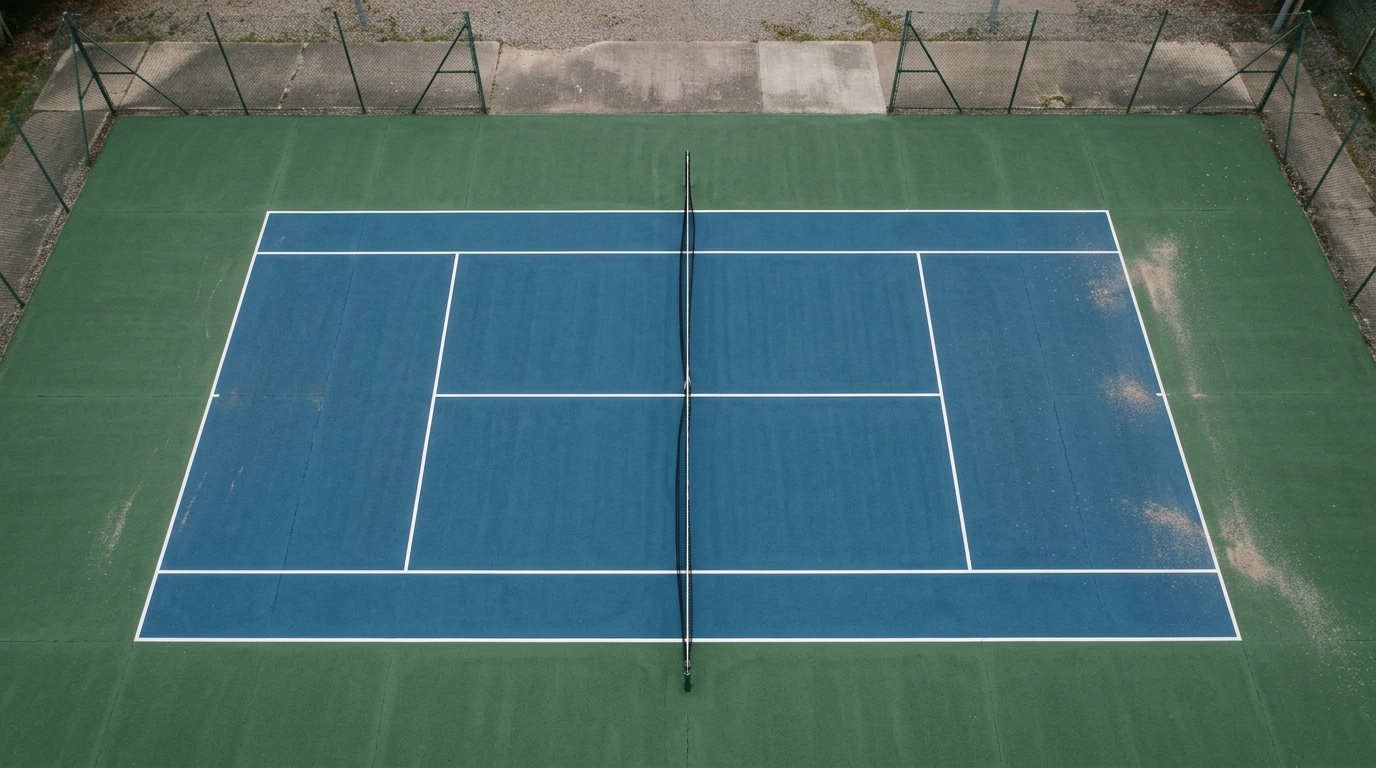
These surfaces are exceptionally low-maintenance and ideal for routine club operations. The maintenance of one hard court providing a tennis court or two pickleball courts is approximately 30% of the cost of upkeeping three padel courts in the same footprint. A stiff brush and an occasional power wash keep an acrylic court playable for years before you ever budget for a standard surface respray. On operational overhead and court durability, Four-Court Tennis Club comes out ahead.
Capitalizing on the Pickleball Boom Within a Tennis Footprint
Critics argue that a four-court tennis footprint locks valuable square footage into a rigid layout. But the global explosion of pickleball completely dismantles that objection. Converting a tennis court to a pickleball court takes just a few minutes.
If you own a tennis club with hard courts, you can have multi-use in the same space and even fit two pickleball courts on one tennis court with just five minutes of setup. By using blended boundary lines or laying a roll-out mat and wheeling out portable nets, a standard 120-foot by 60-foot tennis footprint instantly hosts eight active pickleball players across two matches.
Working on the Six Love app, I see clubs use split-booking rules to partition a single tennis court into two distinct bookable assets on the fly. That unlocks immediate player density without pouring extra concrete foundations or bolting down tons of steel uprights. And when you combine tennis and pickleball, you have a very big and loyal customer base.
Choosing Your Racquet Sports Business Model
My perspective comes from many years in business while also playing three days a week across these sports, watching court traffic, and engineering booking software for clubs. Building for longevity requires honesty about market cycles. Jumping on the hype train isn't always the right move.
For quick profits, a padel club is likely still the best option, provided you have an accessible location without too much competition. You must ensure you do not rely solely on marketplace apps, which leave you defenseless when newer clubs open nearby and siphon half your player base. But for long-term building, a tennis club using its courts to capitalize on the pickleball boom combined with great rackets club booking and management technology stays insulated from the boom and bust cycle that hit padel clubs in Sweden when the market became saturated. Better still, build a destination rackets club that incorporates all 3 and stay away from market place booking systems that will redistribute your players. If implemented well, that model delivers predictable revenue season after season.
What I'd Build Today
If I had to recommend one model to someone signing a commercial lease or acquiring land today, I would tell them to anchor their capital in a four-court hard-court facility rather than an eight-court padel warehouse. Embrace the long-term durability of annual membership revenues.
Paint dual-use lines for both tennis and pickleball on every hard court from day one so you can shift capacity instantly as demand evolves, and avoid relying on third-party marketplace apps that turn court fees into a race to the bottom. Keep modest capital reserves for court respraying down the road, and you will sidestep the punishing glass and turf replacement cycles quietly gutting padel margins across the country. Of course, having all 3 sports, and your own booking system trumps everything.