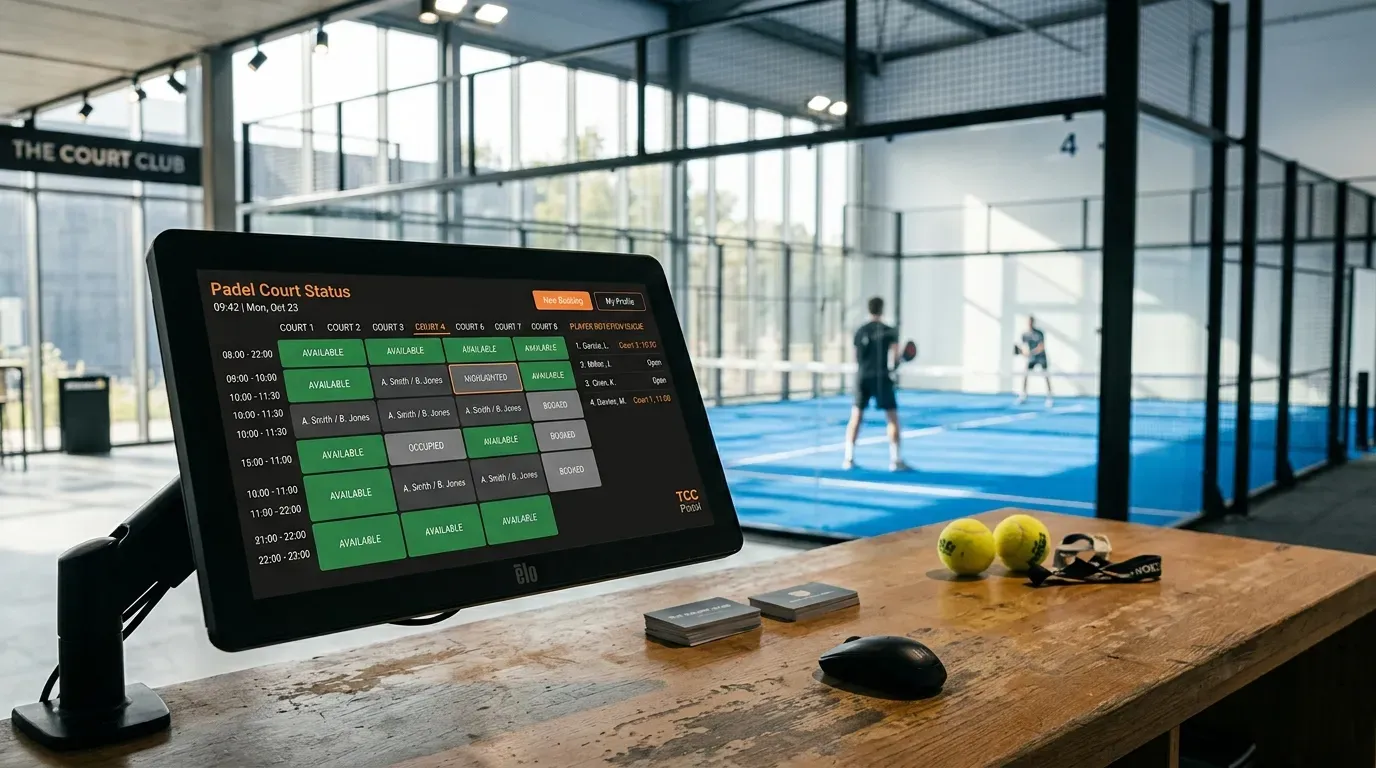
When I started playing padel in Spain, venues operated like anonymous court vendors where players booked an hour, paid, and walked away. I grew up playing club tennis from age 12 and spent decades watching how court operations actually hold together on the ground.
If you want the short answer: do not build a custom padel booking system from scratch. Paying $80,000 to $160,000 for bespoke software that routinely drags past 12 months is an operational trap. Surrendering your schedule entirely to marketplace aggregators drains player loyalty and court revenue. The viable path is running your direct player relationships through dedicated club software, linking out to aggregators only when you need to clear distressed, off-peak inventory.
Deciding between ground-up custom software development and off-the-shelf platforms comes down to four core criteria: initial capital outlay, ownership of your first-party database, recurring administrative load, and platform stability under heavy traffic.
Initial Capital Outlay
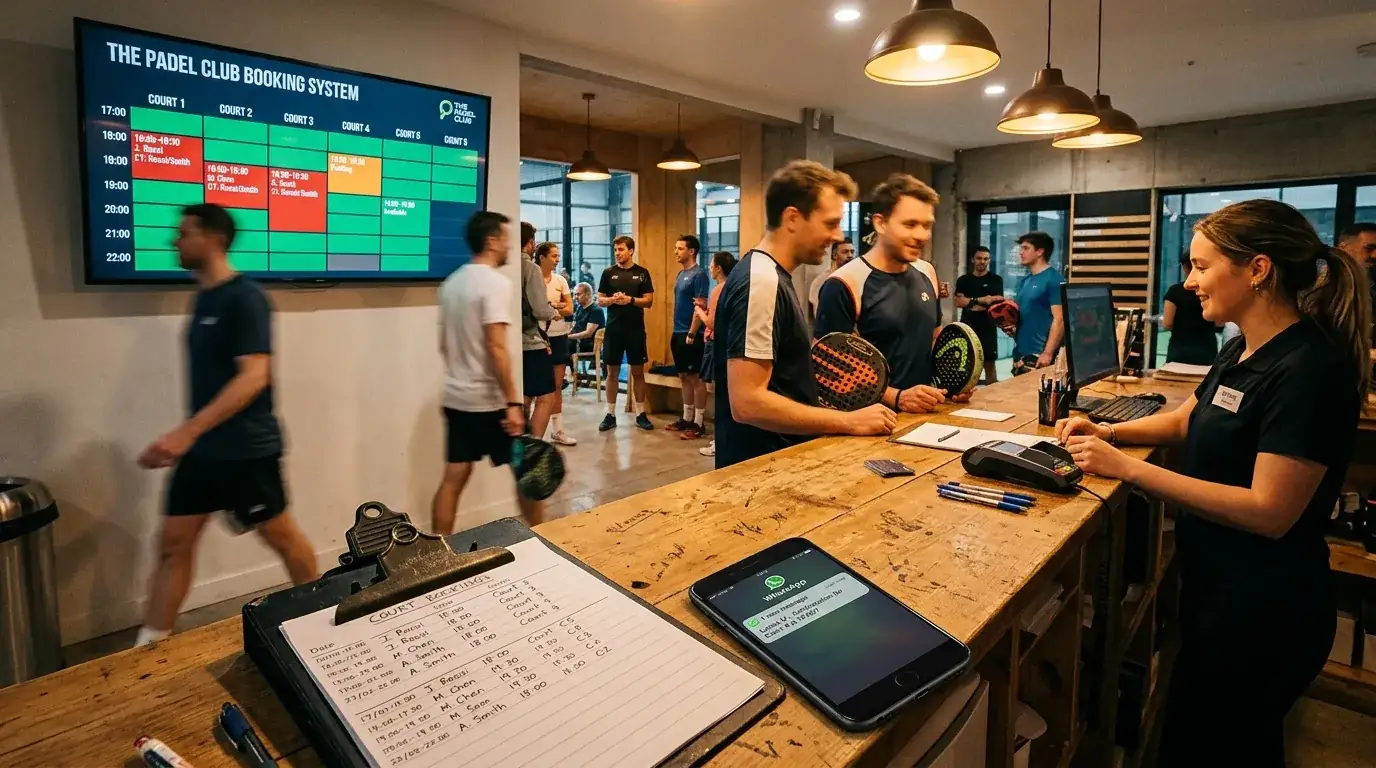
Running court scheduling on manual message threads and paper logbooks is an immediate drain on venue revenue. Managing even three active courts during the 17:00 to 22:00 prime-time rush by hand burns staff hours and degrades player experience. Padel is a four-player sport, meaning players need accurate, real-time schedule information to coordinate matches with three friends. When a customer messages your desk, waits for a receptionist to check a paper sheet, and texts their group back, the match slips away. By the time the desk confirms an 18:30 slot, one player has taken a work call and the booking evaporates.
That manual friction costs serious money. Before automating their court sheets, operators I speak with routinely lose 15 to 20 hours a week answering calls, managing calendar edits, and sorting out double-bookings. After bringing in a dedicated booking platform, that administrative maintenance drops to under 3 hours weekly.
I have spent over 30 years around racquet clubs and currently work on Six Love, a dedicated court management platform. While that gives me a clear bias toward club-owned infrastructure, bespoke engineering still makes sense for massive multi-sport resorts with dedicated in-house developers. Operators often look at the market and assume they have only two choices: build their own software from scratch to get the exact operational flow they want, or surrender their facility to a public marketplace app. Both extremes carry substantial hidden operational penalties that rarely appear on a vendor pitch sheet.
Building bespoke software sounds appealing to operators who want total autonomy over their scheduling rules, physical turnstiles, and automated lighting relays. Owning the code eliminates recurring platform commissions and lets you tailor every member tier. For high-volume multi-sport facilities with deep capital reserves, bespoke software secures permanent data independence.
That autonomy, however, requires funding dedicated engineering cycles that small-to-midsize venues simply cannot sustain alongside court construction debt. According to research on sports facility management software by RaftLabs, custom builds typically run between $80,000 and $160,000 for an initial 10 to 16-week scope. In practice, delivery schedules stretch significantly; Peppernode's sports venue case study showed that building a custom venue booking platform from scratch exceeded 12 months.
Ownership of Member Data
Evaluating scheduling software requires balancing upfront development capital against ongoing player retention risks and platform commissions.
| Product | Price | Best use case | Standout feature | Trade-off |
|---|---|---|---|---|
| Playtomic | ~$2-8% commission + player booking fees | Multi-club marketplace discovery | Large existing player database | Exposes your members to competing nearby clubs |
| Padel Mates | ~$2-8% commission + player booking fees | Player matchmaking and discovery | Instant local visibility | Player loyalty stays with the app rather than the club |
| Courtbrain | Variable SaaS pricing | General court management | Standard booking workflows | Lacks specialized racquet sport workflow rules |
| Courtsapp | Variable SaaS pricing | Basic mobile scheduling | App-based user interface | Limited customisation for complex club operations |
| Court Reserve | Custom club tier pricing | Comprehensive club operations | Robust member database integration | Requires integration layer for advanced multi-sport management |
| Six Love | Custom hybrid platform pricing | Branded club booking infrastructure | Protects first-party data while integrating with aggregators | Requires migration from legacy systems |
Aggregator apps like Playtomic and Padel Mates solve the cold-start problem for brand-new venues. They give a club immediate visibility across an established regional player base. If you open a facility with zero local marketing capacity, listing your courts on an app with thousands of active players fills slots quickly during the early months.
There is an even nastier competitive trap built into aggregator fee structures. When a bigger club down the road in your local catchment area negotiates a sweetheart deal with the booking platform, their players get charged a lower booking commission than yours. Suddenly your venue loses its competitive edge, and you have zero control over the disparity because you are operating inside someone else's walled garden.
Player retention presents an even larger operational hazard. When a club lists its courts on an open marketplace, the venue is displayed directly alongside competing clubs in the same catchment area. Users on those platforms tend to float between facilities rather than developing loyalty to a specific venue. If a neighboring venue drops its court fee by $4 an hour, your regular players see that discount immediately on their screens and jump ship. That leaves you with a toxic dilemma: lower your margins to match the competitor, or watch your prime slots sit empty.
Player acquisition efforts also backfire inside an open ecosystem. If your club spends marketing budget to organize an introductory clinic or an Americana tournament booked through a third-party marketplace app, those new players are funneled directly into the app's database. The marketplace platform now owns the communication channel to your players. In a market boom, this revenue leakage feels tolerable because demand outstrips court capacity. But when local competition intensifies and court supply catches up, relying on a marketplace app leaves you vulnerable to sudden margin collapse.
The Financial and Operational Reality of Marketplace Aggregators
The financial friction comes from micro-commissions. Aggregator platforms take a double bite: clubs surrender 2% to 8% in direct merchant commissions, while players pay an extra booking fee that pushes total platform extraction to nearly 10% per match. Club owners frequently look only at the headline subscription price and ignore those small transaction cuts. Over twelve months, micro-commissions quietly add up to tens of thousands of dollars in lost court revenue.
Peak Traffic Stability
Internal testing cannot simulate the chaos of real club traffic. The real load test happens on launch day. When eighty members jump online simultaneously at 08:00 on Monday morning to grab prime slots for the weekend and the custom server stalls, member trust disappears. For general court management, off-the-shelf tools like Courtbrain offer standard workflows, while Courtsapp provides basic mobile scheduling, but both lack the deep operational logic required for high-intensity padel rotations.
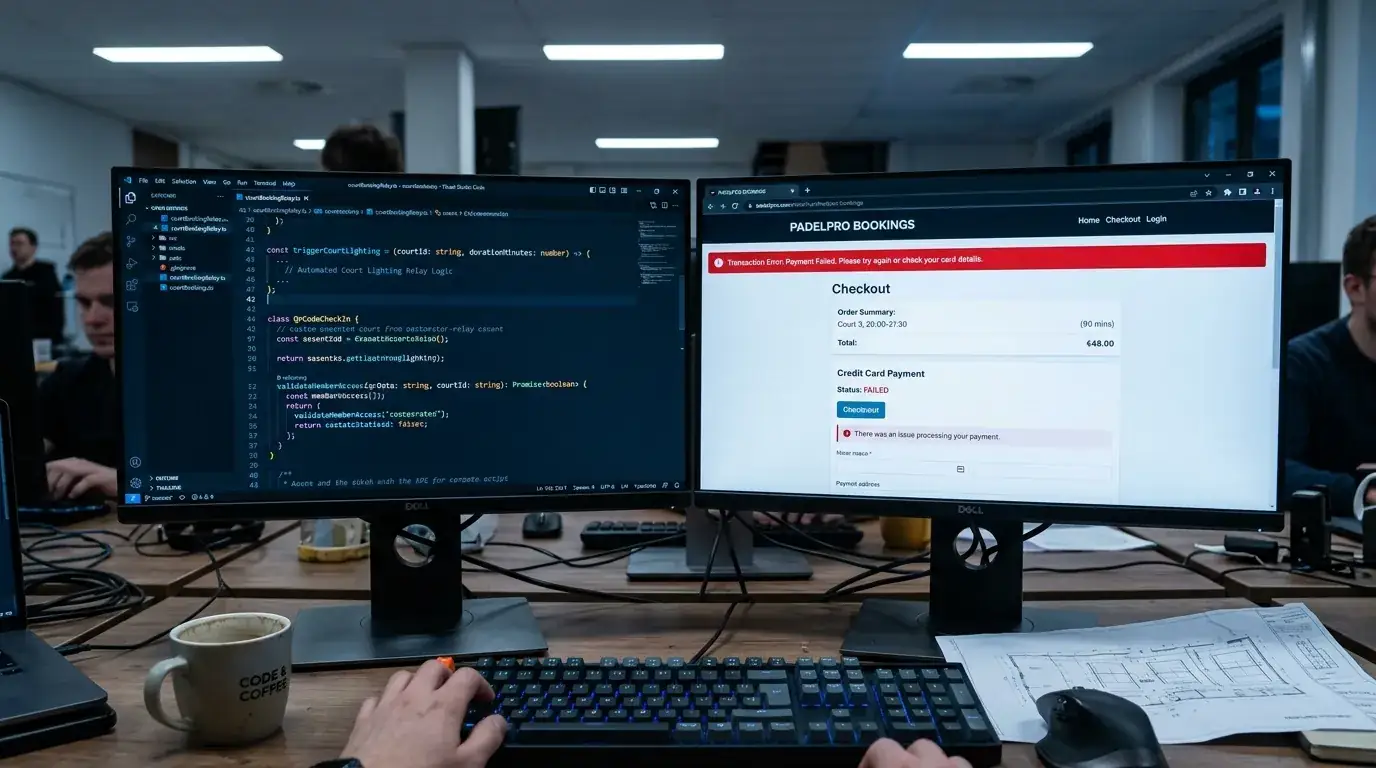
Selecting court booking infrastructure comes down to balancing technical overhead against player retention. Spending $80,000 or more on bespoke engineering suits multi-sport resorts with specialized physical access gates, unique accounting pipelines, and dedicated software teams to maintain the code. If your venue does not possess that engineering budget, writing custom software will drain capital better spent on court maintenance and coaching staff.
Single-court or remote community venues with zero local marketing reach can justify starting on marketplace aggregators like Playtomic or Padel Mates. The visibility helps establish initial court use. Keep in mind, however, that your long-term goal must involve migrating those players to direct booking channels before marketplace commissions cut into sustainable margins.
Established clubs and expanding multi-court facilities should run a dedicated booking platform like Court Reserve or Six Love. Using a dedicated system protects your first-party member database, eliminates marketplace booking fees, and prevents local competitors from poaching your players. Advanced setups can combine both worlds: integrating Court Reserve or direct club software alongside marketplace feeds allows you to release distressed, off-peak slots to public aggregators while reserving prime peak hours exclusively for your direct club community.
What I'd Buy Today
Operating a padel venue without bleeding revenue means owning your member database from day one rather than feeding data to marketplace aggregators. If your facility lacks an enterprise engineering team and a six-figure software budget, avoid custom builds entirely and use an established club platform instead.
- Audit your aggregator exposure: Calculate how many prime-time bookings originate from marketplace apps versus direct channels, and identify members who cross-shop competing venues on those platforms.
- Establish prime-time rules: Lock your 17:00 to 22:00 court sheets for direct club members only, keeping off-peak hours open for aggregator feeds if you need to fill empty slots.
- Protect first-party data: Move your recurring coaching clinics and league sign-ups off public apps and onto a dedicated club system to stop third-party platforms from owning your player relationships.
FAQ
What happens to member data when using a marketplace app?
The marketplace platform retains the player accounts, match histories, and direct contact channels. If your club leaves the app later, you cannot export those players as a proprietary member list.
Can off-the-shelf club systems control physical court lighting?
Yes, modern venue management platforms integrate directly with court lighting relays and smart access control hardware, turning lights on automatically when a confirmed booking begins without requiring bespoke code.